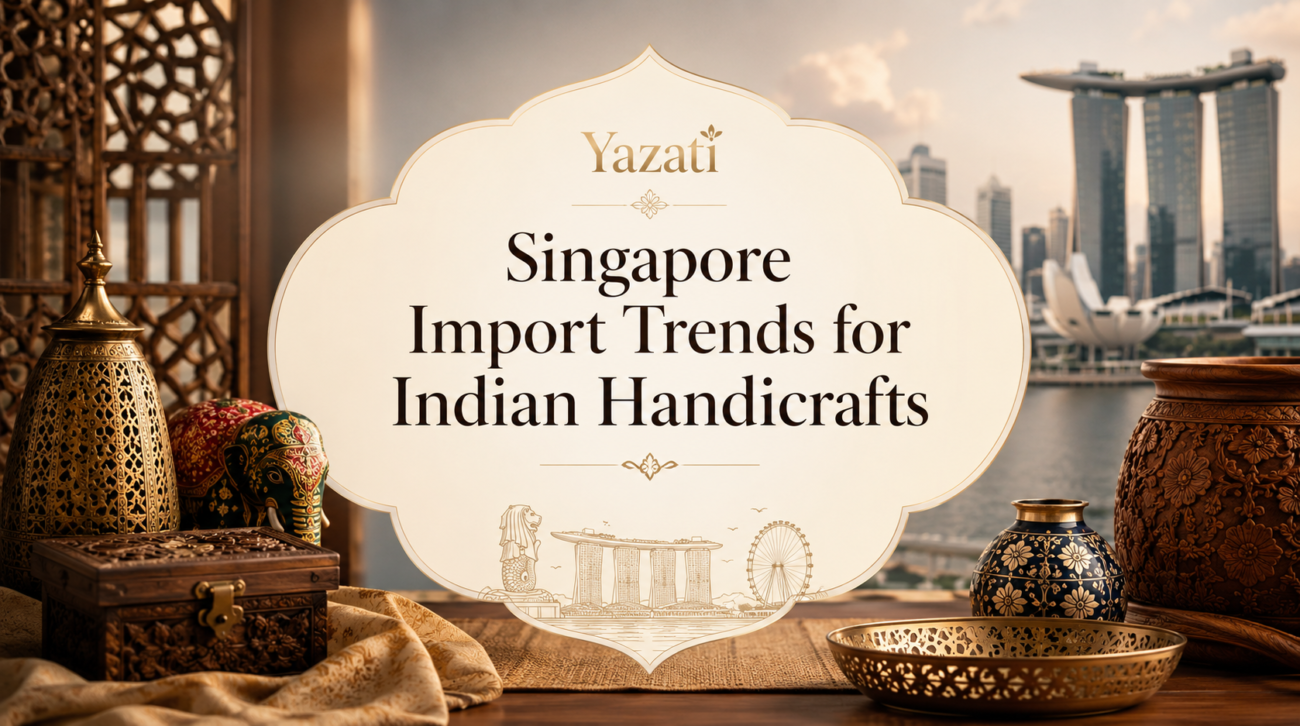
Singapore has emerged as one of Asia’s most attractive markets for premium handmade products. The Singapore Import Trends for Indian Handicrafts indicate a steady rise in demand for authentic, sustainable, and culturally inspired products. As Singapore’s consumers increasingly value craftsmanship and uniqueness over mass-produced goods, Indian handicrafts are finding a stronger foothold in retail stores, hospitality projects, and online marketplaces.
For Indian exporters, understanding these trends is essential for capturing market share and building long-term business relationships.
Introduction to the Singapore Handicrafts Market
Singapore is a global trading hub known for its affluent consumers and sophisticated retail environment. Although the country has limited domestic production of handicrafts, it serves as a major importer and re-exporter of artisanal goods throughout Southeast Asia.
The local market appreciates products that combine heritage, quality, and sustainability. This preference aligns perfectly with India’s rich handicraft traditions.
The market includes:
- Home décor products
- Corporate gifts
- Boutique retail merchandise
- Hospitality décor
- Luxury lifestyle accessories
- Ethnic and cultural collectibles
As consumer preferences evolve, handcrafted products are becoming increasingly desirable among Singaporean buyers.
Overview of India-Singapore Trade Relations
India and Singapore maintain strong economic ties supported by various bilateral agreements. Singapore consistently ranks among India’s leading trade partners and investment destinations.
Several factors strengthen this relationship:
| Factor | Impact on Handicraft Trade |
|---|---|
| Strategic Trade Agreements | Reduced trade barriers |
| Strong Shipping Connectivity | Faster deliveries |
| Growing Indian Diaspora | Increased cultural demand |
| Business-Friendly Environment | Easier market entry |
| High Purchasing Power | Demand for premium products |
These advantages create favorable conditions for Indian handicraft exporters seeking market expansion.
Why Singapore Imports Indian Handicrafts
Indian handicrafts offer a unique combination of artistry, heritage, and functionality. Singaporean consumers increasingly seek products with a story behind them.
Cultural Appeal of Indian Artisanship
Indian handicrafts represent centuries of craftsmanship. Products such as hand-carved wooden sculptures, brass artifacts, embroidered textiles, and traditional paintings appeal to consumers who appreciate authentic cultural products.
Many Singaporean households use these products to create distinctive interior designs that blend traditional and modern aesthetics.
Growing Demand for Handmade Products
Mass production has created a market shift toward unique and handcrafted goods. Buyers are increasingly willing to pay premium prices for:
- Handmade furniture
- Decorative accessories
- Artisan-crafted gifts
- Eco-friendly home products
- Sustainable lifestyle items
This trend strongly supports Indian handicraft exports.
Key Categories of Indian Handicrafts Imported into Singapore
Wooden Handicrafts
Wooden products remain among the most popular imports.
Examples include:
- Decorative boxes
- Wall hangings
- Carved furniture
- Religious artifacts
- Sculptures
Sustainably sourced wood products receive particular attention from environmentally conscious buyers.
Metal Artifacts
Indian metal handicrafts continue to enjoy strong demand.
Popular items include:
- Brass lamps
- Copper décor
- Silver-plated accessories
- Metal sculptures
- Traditional utensils
These products are frequently used in homes, hotels, and restaurants.
Textiles and Embroidered Products
Handmade textiles have become important lifestyle products.
Common imports include:
- Cushion covers
- Table runners
- Wall tapestries
- Handwoven fabrics
- Embroidered gift items
The growing interest in interior decoration drives demand in this segment.
Home Décor and Gift Items
Singapore’s gifting culture contributes significantly to handicraft imports.
Top-selling products include:
- Decorative candles
- Pottery
- Handmade frames
- Artistic figurines
- Sustainable gift sets
Singapore Import Trends for Indian Handicrafts in Recent Years
Import Growth Statistics
Recent market observations indicate steady growth in imports of handmade and artisan products. Singapore’s consumers increasingly prioritize quality and uniqueness, supporting consistent demand.
Several importers have expanded their sourcing networks in India to access exclusive handcrafted collections.
Consumer Preferences
Current preferences include:
- Sustainable materials
- Ethical sourcing
- Minimalist designs
- Functional décor
- Premium craftsmanship
Products that combine traditional techniques with contemporary design tend to perform best.
Retail and E-commerce Expansion
The rise of e-commerce has transformed handicraft distribution.
Popular sales channels include:
- Online lifestyle stores
- Specialty home décor platforms
- Social commerce channels
- Luxury retail websites
Digital platforms allow Indian exporters to reach customers directly and through local distributors.
Major Importers and Distribution Channels
Wholesale Importers
Many Singapore-based importers purchase handicrafts in bulk and distribute them across Southeast Asia.
Benefits include:
- Larger order volumes
- Consistent demand
- Regional market access
Specialty Retail Stores
Boutique stores often focus on artisanal and culturally inspired products.
These retailers prefer:
- Limited-edition collections
- Handmade products
- Story-driven branding
Online Marketplaces
Digital platforms continue to expand opportunities for exporters.
Advantages include:
- Lower entry barriers
- Broader customer reach
- Direct consumer engagement
Factors Driving Demand in Singapore
Sustainable Purchasing Behavior
Consumers increasingly support products that promote:
- Fair trade practices
- Artisan empowerment
- Environmental responsibility
Indian handicrafts often align well with these values.
Tourism and Hospitality Industry
Hotels, resorts, and restaurants frequently purchase handcrafted décor to enhance guest experiences.
Demand exists for:
- Wall art
- Decorative lighting
- Furniture accents
- Cultural artifacts
Corporate Gifting Market
Singapore’s corporate sector regularly purchases premium handcrafted gifts.
Popular choices include:
- Executive gift boxes
- Customized décor
- Artisan-made accessories
Challenges Faced by Indian Exporters
Regulatory Compliance
Exporters must comply with:
- Import documentation requirements
- Product labeling regulations
- Customs procedures
Proper documentation helps avoid delays.
Logistics and Shipping Costs
Rising freight expenses can affect competitiveness.
Exporters should optimize:
- Packaging
- Container utilization
- Supply chain planning
Market Competition
Competition comes from:
- Indonesia
- Vietnam
- Thailand
- China
Differentiation through quality and design remains essential.
Opportunities for Indian Handicraft Manufacturers
Premium Product Positioning
Singapore’s affluent consumers are willing to pay higher prices for premium products.
Strategies include:
- Luxury packaging
- Limited editions
- Artisan storytelling
Customized Product Development
Customized products often generate higher margins.
Examples:
- Personalized gifts
- Corporate branding
- Hospitality-specific collections
Luxury Home Décor Segment
The luxury interior design market presents significant growth opportunities.
Products with premium finishes and contemporary designs perform particularly well.
Singapore Import Regulations and Documentation
Exporters typically require:
- Commercial Invoice
- Packing List
- Bill of Lading
- Certificate of Origin
- Import Permits (where applicable)
Working with experienced freight forwarders can simplify compliance requirements.
Pricing Trends and Market Dynamics
Current market trends indicate increasing demand for:
| Product Type | Pricing Trend |
|---|---|
| Premium Wooden Décor | Rising |
| Sustainable Handicrafts | Rising |
| Handmade Textiles | Stable Growth |
| Corporate Gift Products | Strong Growth |
| Luxury Artisan Products | Rising |
Higher-quality products continue to command premium pricing.
Marketing Strategies for Success
Digital Marketing
Successful exporters invest in:
- Search engine optimization (SEO)
- Social media marketing
- Product storytelling
- Video demonstrations
Trade Exhibitions
Participation in international trade fairs helps:
- Generate leads
- Meet distributors
- Showcase new collections
Distributor Partnerships
Reliable local partners provide:
- Market insights
- Retail access
- Customer support
Future Outlook for Indian Handicraft Exports to Singapore
The future of Singapore Import Trends for Indian Handicrafts appears highly promising. Several market forces support continued growth:
- Rising consumer spending
- Strong demand for sustainable products
- Expansion of e-commerce
- Growth in hospitality investments
- Increased appreciation for artisan-made goods
Indian exporters who focus on quality, innovation, and sustainability are likely to benefit most from these opportunities.
Frequently Asked Questions
1. Which Indian handicrafts are most popular in Singapore?
Wooden handicrafts, metal artifacts, home décor products, textiles, and handmade gift items are among the most sought-after categories.
2. Is Singapore a good market for Indian handicraft exporters?
Yes. Singapore offers high purchasing power, strong logistics infrastructure, and growing demand for premium handmade products.
3. What factors drive handicraft demand in Singapore?
Consumer interest in sustainability, unique craftsmanship, interior decoration, hospitality projects, and corporate gifting drives demand.
4. Do Indian exporters face strong competition?
Yes. Exporters compete with suppliers from countries such as Vietnam, Indonesia, Thailand, and China.
5. Are eco-friendly handicrafts gaining popularity?
Absolutely. Sustainable and ethically sourced products are increasingly preferred by Singaporean consumers.
6. What is the biggest opportunity for Indian handicraft manufacturers?
The premium and luxury home décor segment offers some of the strongest growth potential.
Conclusion
The Singapore Import Trends for Indian Handicrafts reveal a market that increasingly values authenticity, sustainability, and superior craftsmanship. Singapore’s strong economy, sophisticated consumer base, and strategic role as a regional trade hub make it an attractive destination for Indian handicraft exporters. Businesses that emphasize quality, design innovation, ethical sourcing, and effective distribution strategies can build lasting success in this growing market.
For additional trade information, exporters can also explore resources from the World Trade Organization (WTO): https://www.wto.org
✨ Discover Global Sourcing Excellence with Netyex ✨
Netyex is your trusted B2B sourcing partner, connecting international buyers with India’s finest manufacturers and curated product lines—from handicrafts and home décor to kitchenware, textiles, hospitality essentials, and more. With verified suppliers and end-to-end support, we make global procurement seamless, reliable, and efficient.
👉 Elevate your sourcing experience—explore Netyex today.
📦 Bulk orders & customisation | 🌍 Worldwide delivery | 🤝 Trusted by global buyers
Visit Netyex to source premium Indian products with confidence.