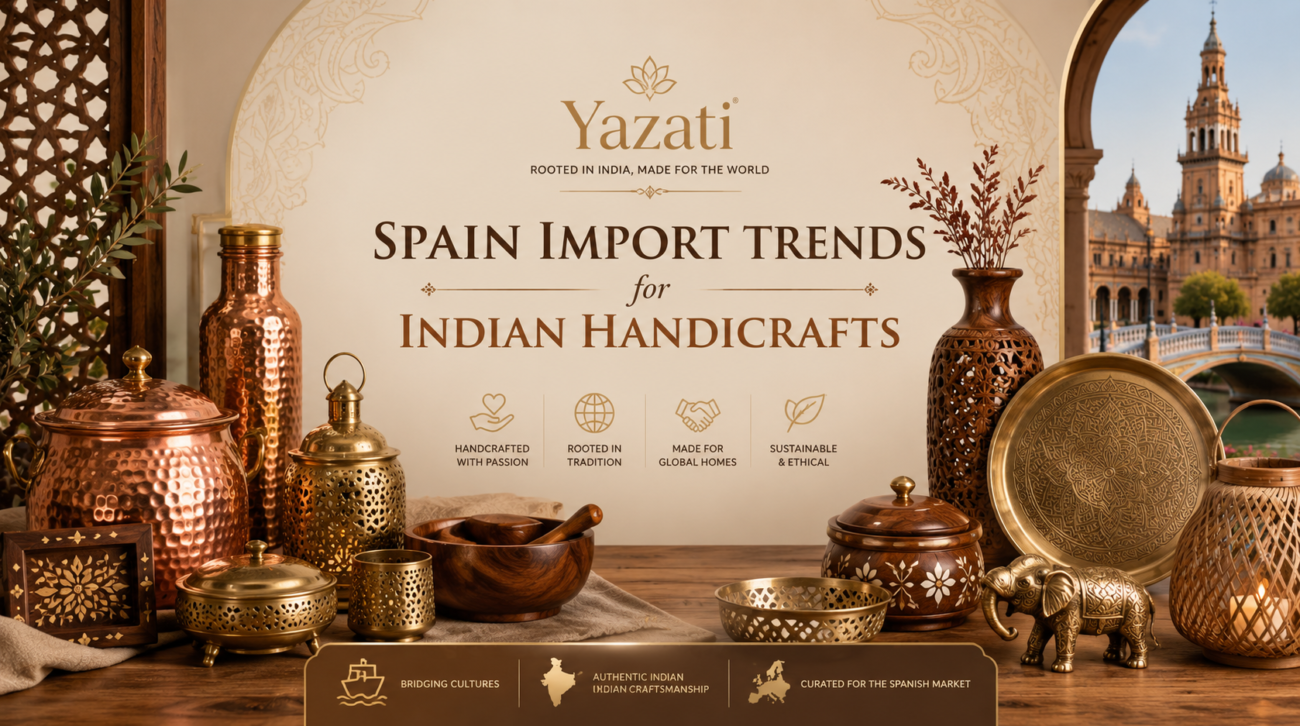
Spain has emerged as one of Europe’s most promising destinations for Indian handicrafts. As Spanish consumers increasingly seek sustainable, handmade, and ethically sourced home décor, furniture, textiles, and gift items, Indian artisans and exporters have significant opportunities to expand their market presence.
This comprehensive guide explores Spain Import Trends for Indian Handicrafts, covering import patterns, high-demand products, buyer preferences, regulatory requirements, market opportunities, challenges, and strategies for successful exports.
Overview of Spain’s Handicraft Import Market
Spain is among Europe’s largest importers of decorative products, handmade home accessories, furniture, textiles, and artisan goods. Rising consumer interest in interior decoration, sustainable lifestyles, and handcrafted products has significantly boosted imports from developing countries.
India has established itself as a trusted supplier because of its:
- Skilled craftsmanship
- Competitive pricing
- Diverse product range
- Sustainable production methods
- Rich cultural heritage
Spanish retailers, wholesalers, interior designers, boutique stores, and online marketplaces actively source handcrafted products from India.
Why Spain Imports Indian Handicrafts
Indian handicrafts combine tradition with functionality. Spanish consumers appreciate products that are unique rather than mass-produced.
Several factors contribute to this demand:
- Handmade authenticity
- Eco-friendly production
- Natural raw materials
- Cultural uniqueness
- Affordable luxury
- Fair-trade products
Many Spanish buyers also value handcrafted goods because they align with sustainability goals and environmentally responsible purchasing.
Current Spain Import Trends for Indian Handicrafts
Recent market trends indicate growing demand across several product categories.
Increasing Demand for Sustainable Products
Consumers increasingly prefer products made from:
- Bamboo
- Cane
- Jute
- Cotton
- Recycled wood
- Natural fibers
Eco-conscious purchasing continues to influence retail decisions across Spain.
Growth in Home Decoration Products
Home renovation trends have increased sales of:
- Decorative lanterns
- Wall hangings
- Wooden shelves
- Handmade mirrors
- Ceramic décor
- Brass accessories
Indian craftsmanship fits perfectly within Mediterranean, Bohemian, Rustic, and Scandinavian interior styles.
Rise of Online Retail
E-commerce platforms have expanded opportunities for Indian exporters.
Spanish consumers now purchase handicrafts through:
- Online marketplaces
- Interior décor websites
- Boutique online stores
- Social commerce
- Independent artisan retailers
This digital transformation has reduced dependence on traditional retail channels.
Popular Indian Handicraft Categories
Wooden Handicrafts
India exports various wooden products, including:
- Decorative boxes
- Furniture
- Wall décor
- Carved panels
- Candle holders
- Kitchen accessories
Sheesham wood products remain especially popular.
Metal Handicrafts
Spanish buyers import:
- Brass décor
- Iron lanterns
- Aluminum decorative items
- Copper utensils
- Wall art
- Garden accessories
These products complement both traditional and modern homes.
Textile Handicrafts
Indian textiles continue to enjoy strong demand.
Popular items include:
Natural dyes and block printing add additional market value.
Eco-Friendly Products
Environmental awareness has boosted imports of:
- Jute bags
- Bamboo baskets
- Natural fiber storage products
- Sustainable gift packaging
- Palm leaf products
These products align with Spain’s sustainability initiatives.
Market Size and Trade Analysis
Spain imports billions of euros worth of furniture, home décor, textiles, and lifestyle products annually. Although handicrafts represent a niche segment, demand has steadily increased due to changing consumer preferences.
Key drivers include:
- Tourism
- Interior design industry
- Hospitality sector
- Boutique retail
- Online marketplaces
- Sustainable living trends
Indian exporters can benefit by targeting premium handcrafted collections rather than competing solely on price.
Key Spanish Buyers
Major buyers include:
- Home décor wholesalers
- Furniture importers
- Gift retailers
- Hotel suppliers
- Interior designers
- Lifestyle boutiques
- E-commerce companies
Trade exhibitions and B2B marketplaces also connect Indian manufacturers with Spanish importers.
Import Regulations
Before exporting to Spain, Indian businesses should ensure compliance with European Union regulations.
Important considerations include:
- Product safety standards
- Customs documentation
- Certificate of Origin
- Commercial Invoice
- Packing List
- HS Codes
- VAT compliance where applicable
Wood products may require phytosanitary certification depending on product type.
Packaging and Labeling Requirements
Professional packaging increases buyer confidence.
Recommended practices include:
- Moisture-resistant packaging
- Recyclable materials
- Clear labeling
- Product dimensions
- Material composition
- Country of origin
- Barcode (when required)
Sustainable packaging is increasingly preferred by European retailers.
Export Opportunities
Several sectors present excellent opportunities.
Hospitality Industry
Hotels increasingly purchase:
- Decorative lamps
- Wooden furniture
- Handmade mirrors
- Wall décor
Gift Market
Seasonal gifting drives demand for:
- Handmade candles
- Decorative boxes
- Festive ornaments
Interior Design
Design firms seek customized handcrafted products for residential and commercial projects.
Eco Retail
Green retail stores actively source environmentally friendly handcrafted collections.
Challenges for Indian Exporters
Despite strong demand, exporters should prepare for challenges such as:
- Shipping costs
- Long transit times
- European quality standards
- Strong competition from other Asian countries
- Currency fluctuations
- Product certification requirements
Building long-term buyer relationships can help overcome these challenges.
Marketing Strategies for Success
Successful exporters typically invest in:
Digital Presence
Maintain:
- Professional website
- Product catalog
- High-quality photography
- Social media profiles
Trade Fairs
Participate in:
- European home décor exhibitions
- Furniture trade fairs
- Gift exhibitions
- International sourcing events
These platforms facilitate direct buyer interactions.
Customization
Spanish buyers often prefer:
- Private labeling
- Customized dimensions
- Exclusive collections
- Small minimum order quantities
Offering flexibility can enhance competitiveness.
Sustainability Certifications
Certifications related to sustainable sourcing and ethical manufacturing can strengthen credibility with European buyers.
Future Outlook
The future of Spain Import Trends for Indian Handicrafts appears promising. Growing awareness of sustainability, demand for authentic artisan products, and expansion of online retail channels are expected to support continued market growth.
Indian exporters who emphasize quality, innovation, eco-friendly materials, and reliable delivery are well positioned to capitalize on these opportunities.
Investing in modern product designs while preserving traditional craftsmanship can further enhance India’s competitiveness in the Spanish market.
Frequently Asked Questions (FAQs)
1. Why is Spain importing more Indian handicrafts?
Spanish consumers increasingly prefer sustainable, handmade, and unique products that reflect craftsmanship and cultural authenticity.
2. Which Indian handicrafts are most popular in Spain?
Wooden furniture, brass décor, metal handicrafts, cotton textiles, handmade rugs, and eco-friendly products are among the most sought-after items.
3. Do Indian exporters need special certifications?
Depending on the product, exporters may need to comply with EU product safety standards, customs documentation, and phytosanitary requirements for certain wood products.
4. What are the best sales channels in Spain?
Wholesalers, online marketplaces, home décor retailers, boutique stores, hotels, and interior designers are key distribution channels.
5. How can exporters increase sales in Spain?
Focus on quality, sustainable materials, attractive packaging, digital marketing, trade fairs, and customized product offerings.
6. Is Spain a profitable market for Indian handicrafts?
Yes. Demand for artisan, eco-friendly, and ethically produced goods continues to grow, making Spain an attractive export destination for Indian handicraft manufacturers.
Conclusion
The Spain Import Trends for Indian Handicrafts demonstrate a favorable environment for Indian exporters. Spain’s appreciation for handcrafted, sustainable, and culturally distinctive products aligns well with India’s strengths in artisanal production. By understanding market preferences, complying with European regulations, investing in quality and sustainable practices, and leveraging both digital and traditional marketing channels, Indian businesses can establish long-term partnerships and expand their footprint in the Spanish market.
For additional guidance on exporting to the European Union, consult the European Commission’s Access2Markets portal: https://trade.ec.europa.eu/access-to-markets/en
✨ Discover Global Sourcing Excellence with Netyex ✨
Netyex is your trusted B2B sourcing partner, connecting international buyers with India’s finest manufacturers and curated product lines—from handicrafts and home décor to kitchenware, textiles, hospitality essentials, and more. With verified suppliers and end-to-end support, we make global procurement seamless, reliable, and efficient.
👉 Elevate your sourcing experience—explore Netyex today.
📦 Bulk orders & customisation | 🌍 Worldwide delivery | 🤝 Trusted by global buyers
Visit Netyex to source premium Indian products with confidence.