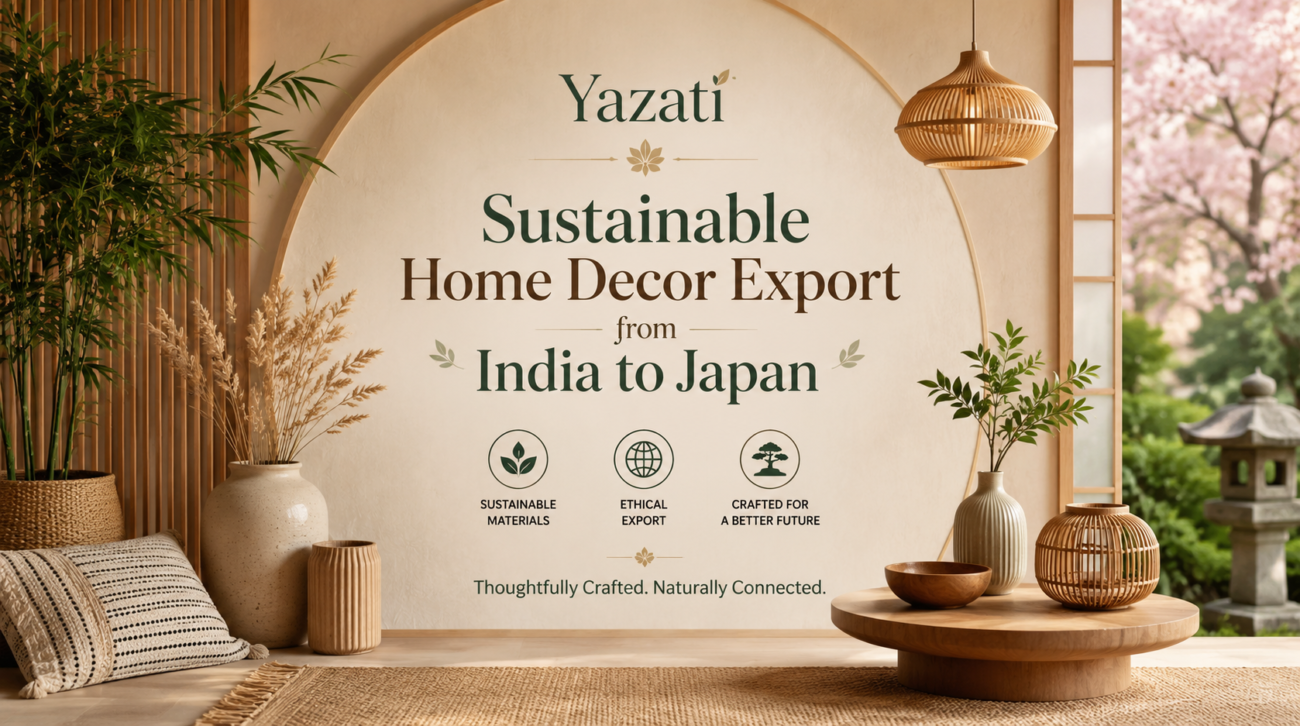
The market for Sustainable Home Decor Export from India to Japan is experiencing significant growth as Japanese consumers increasingly prioritize environmentally responsible products. India’s rich heritage of handcrafted goods, combined with abundant natural resources and skilled artisans, positions the country as a leading supplier of sustainable home decor products.
For Indian exporters, Japan offers a premium market willing to pay for quality, authenticity, sustainability, and craftsmanship. Understanding market preferences, regulations, and buyer expectations is crucial for building a successful export business.
Introduction to the Growing Export Opportunity
Japan is one of the world’s largest importers of home furnishing and lifestyle products. The country’s growing awareness of sustainability, minimalism, and eco-conscious living has fueled demand for environmentally friendly decor products.
Indian manufacturers and exporters are uniquely positioned to meet this demand through products made from:
- Bamboo
- Jute
- Cane
- Reclaimed wood
- Organic cotton
- Recycled materials
- Natural dyes
The combination of sustainability and traditional craftsmanship creates a strong value proposition for Japanese buyers.
Why Japan Is a Promising Market for Sustainable Decor
Consumer Preferences in Japan
Japanese consumers are known for appreciating:
- Simplicity
- Functionality
- Quality craftsmanship
- Natural materials
- Long-lasting products
These preferences align closely with India’s sustainable home decor offerings.
The Japanese concept of aesthetic simplicity complements handcrafted Indian products that feature clean designs and natural textures.
Demand for Eco-Friendly Products
Environmental awareness has become a major purchasing factor in Japan. Consumers increasingly seek products that:
- Reduce environmental impact
- Support ethical sourcing
- Use renewable materials
- Promote responsible consumption
This shift creates strong opportunities for exporters specializing in sustainable home decor.
India’s Competitive Advantage in Sustainable Manufacturing
Traditional Craftsmanship
India possesses centuries-old artisanal traditions that continue to thrive across various regions.
Notable craft clusters include:
- Rajasthan woodcraft
- Uttar Pradesh metalwork
- West Bengal jute products
- Kerala bamboo crafts
- Gujarat textile artistry
These crafts offer authenticity that Japanese consumers highly value.
Renewable and Recycled Materials
Indian manufacturers increasingly utilize:
| Material | Sustainability Benefit |
|---|---|
| Bamboo | Rapidly renewable |
| Jute | Biodegradable |
| Reclaimed Wood | Reduces deforestation |
| Organic Cotton | Lower chemical usage |
| Recycled Metal | Waste reduction |
| Water Hyacinth | Renewable resource |
Such materials strengthen export competitiveness.
Popular Sustainable Home Decor Categories
Bamboo Decor
Bamboo products enjoy strong demand due to their eco-friendly nature.
Popular items include:
- Lampshades
- Wall panels
- Decorative baskets
- Table accessories
- Plant holders
Jute and Natural Fiber Products
Jute remains one of India’s strongest sustainable export categories.
Examples include:
- Rugs
- Storage baskets
- Table mats
- Cushion covers
- Decorative wall hangings
Recycled Wood Furniture
Japanese buyers increasingly seek:
- Reclaimed wood shelving
- Coffee tables
- Decorative storage units
- Wooden accent pieces
Each piece tells a sustainability story that resonates with eco-conscious consumers.
Handmade Textiles
Handwoven and naturally dyed textiles are particularly attractive in Japan.
Products include:
- Throws
- Cushion covers
- Curtains
- Table runners
- Wall tapestries
Eco-Friendly Lighting
Sustainable lighting solutions made from bamboo, cane, and recycled materials continue gaining popularity.
Understanding Japanese Market Requirements
Quality Expectations
Japan maintains some of the world’s highest quality standards.
Buyers expect:
- Precise finishing
- Consistent sizing
- Durable construction
- Defect-free products
- Reliable delivery schedules
Quality control systems are essential.
Packaging Standards
Packaging should be:
- Protective
- Minimalistic
- Sustainable
- Attractive
- Easy to recycle
Many Japanese buyers prefer environmentally responsible packaging solutions.
Labeling Requirements
Labels should clearly communicate:
- Country of origin
- Material composition
- Care instructions
- Sustainability claims
- Product dimensions
Accurate information builds trust and compliance.
Export Regulations and Compliance
Documentation Needed
Common export documents include:
- Commercial invoice
- Packing list
- Bill of lading
- Certificate of origin
- Export declaration
- Insurance documents
Proper documentation ensures smooth customs clearance.
Customs Procedures
Exporters should work closely with freight forwarders and customs specialists familiar with Japanese import regulations.
For official guidance, exporters can consult the Japan External Trade Organization and the Federation of Indian Export Organisations.
Finding Japanese Buyers and Distributors
Trade Shows and Exhibitions
Participation in trade fairs can significantly increase visibility.
Examples include:
- Interior Lifestyle Tokyo
- Tokyo International Gift Show
These events connect exporters directly with importers and retailers.
B2B Marketplaces
Effective channels include:
- Alibaba
- IndiaMART
- TradeIndia
These platforms help identify potential buyers before entering the market physically.
Sustainable Packaging Strategies
Eco-friendly packaging strengthens the sustainability message.
Recommended materials include:
- Recycled cardboard
- Paper tape
- Compostable fillers
- Recyclable labels
- Soy-based inks
Japanese consumers often evaluate packaging sustainability alongside the product itself.
Pricing and Profitability Considerations
Cost Calculation Framework
Export pricing should include:
- Manufacturing cost
- Packaging cost
- Inland transportation
- Port charges
- Freight costs
- Insurance
- Marketing expenses
- Distributor margins
Currency and Payment Methods
Common payment methods include:
- Letter of Credit (LC)
- Telegraphic Transfer (TT)
- Advance payment
- Documentary collections
Managing currency fluctuations is essential for maintaining profitability.
Marketing Sustainable Home Decor in Japan
Storytelling and Brand Positioning
Japanese consumers appreciate authenticity.
Highlight:
- Artisan communities
- Traditional techniques
- Sustainable sourcing
- Social impact initiatives
- Environmental benefits
Stories create emotional connections and differentiate products.
Digital Marketing Approaches
Effective channels include:
- B2B websites
- LinkedIn outreach
- Japanese-language catalogs
- Online trade directories
- Email campaigns
Localized communication often improves conversion rates.
Logistics and Supply Chain Management
Shipping Methods
Common options:
- Sea freight for large orders
- Air freight for urgent shipments
Sea freight generally provides the most economical solution for home decor products.
Warehousing Options
Exporters may consider:
- Distributor-managed inventory
- Third-party logistics providers
- Bonded warehouses
Strategic inventory placement can improve delivery performance.
Challenges and Risk Management
Cultural Differences
Success in Japan often requires:
- Patience
- Consistent communication
- Relationship building
- Respect for business etiquette
Long-term trust is highly valued.
Market Competition
Exporters face competition from:
- Vietnam
- Indonesia
- Thailand
- China
Differentiation through sustainability and craftsmanship remains critical.
Success Stories and Industry Examples
Many Indian exporters have successfully positioned handcrafted bamboo, jute, and reclaimed wood products as premium lifestyle items in Japan.
Their success typically stems from:
- Strong quality control
- Consistent delivery
- Sustainability certification
- Long-term buyer relationships
- Adaptation to Japanese tastes
Future Trends in Sustainable Home Decor Export
Emerging trends include:
- Carbon-neutral products
- Circular economy designs
- Plastic-free packaging
- Smart sustainable homes
- Certified ethical sourcing
- Handmade luxury decor
Exporters that align with these trends will likely gain competitive advantages over the coming decade.
Frequently Asked Questions
1. Why is Japan attractive for sustainable home decor exports?
Japan has strong consumer demand for eco-friendly, high-quality, and aesthetically pleasing products.
2. Which Indian materials are most popular in Japan?
Bamboo, jute, reclaimed wood, organic cotton, and natural fibers are highly sought after.
3. Do exporters need sustainability certifications?
While not always mandatory, certifications can significantly improve buyer confidence and market access.
4. What are the biggest challenges when exporting to Japan?
Meeting quality expectations, cultural adaptation, and building long-term relationships are common challenges.
5. Which trade shows are useful for finding Japanese buyers?
Interior Lifestyle Tokyo and Tokyo International Gift Show are among the most important industry events.
6. What packaging do Japanese buyers prefer?
Minimalistic, recyclable, and environmentally responsible packaging is generally preferred.
7. How can small Indian businesses enter the Japanese market?
By leveraging B2B platforms, participating in trade fairs, partnering with distributors, and emphasizing sustainable craftsmanship.
Conclusion
The opportunity for Sustainable Home Decor Export from India to Japan continues to expand as Japanese consumers increasingly prioritize sustainability, authenticity, and superior craftsmanship. India’s strengths in natural materials, artisanal heritage, and environmentally responsible production provide a powerful foundation for export success.
Businesses that invest in quality control, sustainability practices, cultural understanding, and strategic partnerships can establish long-term positions in this premium market. As eco-conscious living becomes more mainstream, exporters who align their offerings with Japanese values will be well-positioned for sustainable growth and profitability.
✨ Discover Global Sourcing Excellence with Netyex ✨
Netyex is your trusted B2B sourcing partner, connecting international buyers with India’s finest manufacturers and curated product lines—from handicrafts and home décor to kitchenware, textiles, hospitality essentials, and more. With verified suppliers and end-to-end support, we make global procurement seamless, reliable, and efficient.
👉 Elevate your sourcing experience—explore Netyex today.
📦 Bulk orders & customisation | 🌍 Worldwide delivery | 🤝 Trusted by global buyers
Visit Netyex to source premium Indian products with confidence.