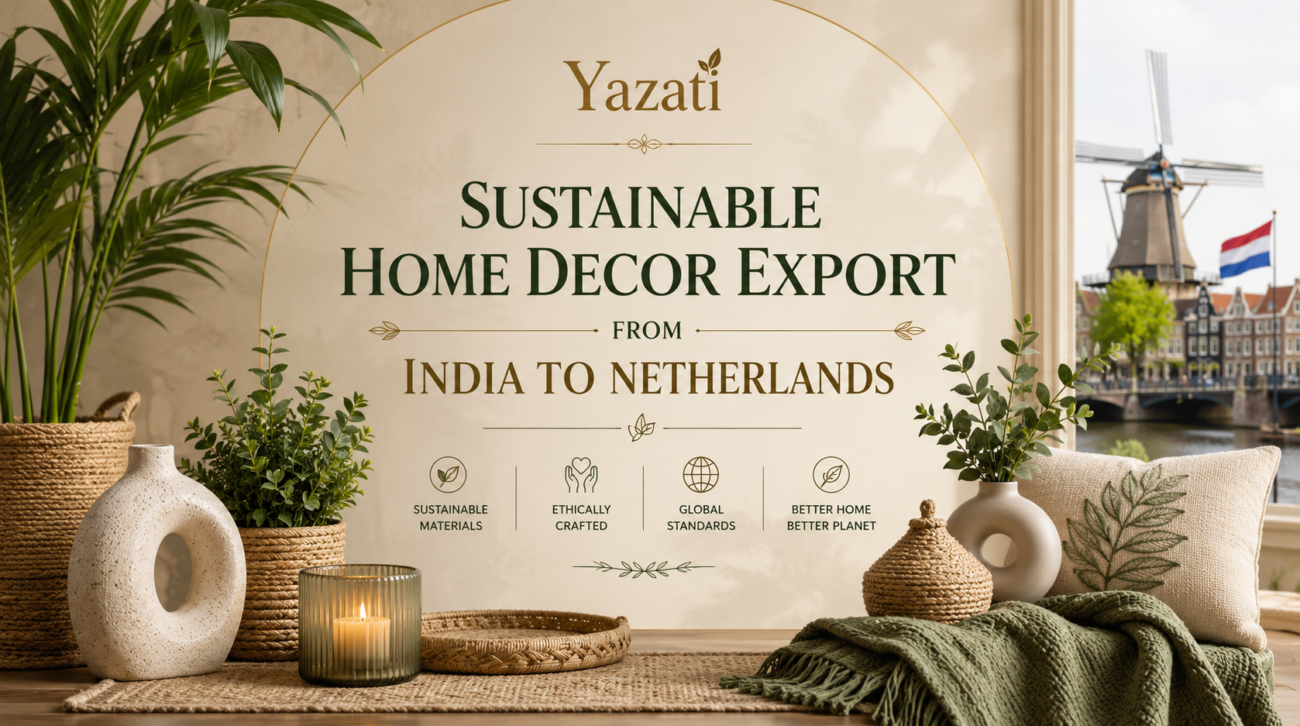
The market for Sustainable Home Decor Export from India to Netherlands is expanding quickly as consumers in Europe increasingly seek eco-friendly, ethical, and handmade products. Indian artisans and manufacturers are uniquely positioned to meet this demand because India offers a rich tradition of craftsmanship, natural materials, and sustainable production methods.
From bamboo baskets and reclaimed wood furniture to organic cotton cushion covers and recycled glass decor, Indian exporters are finding exciting opportunities in the Dutch market. The Netherlands acts as both a consumer market and a distribution hub for the broader European Union, making it an attractive destination for sustainable exports.
In this comprehensive guide, you’ll learn how to successfully export sustainable home decor products from India to the Netherlands, including market trends, certifications, logistics, marketing strategies, and future opportunities.
Understanding the Growing Demand for Sustainable Home Decor
Sustainability is no longer just a trend. It has become a lifestyle choice across Europe. Consumers are actively looking for products that are environmentally friendly, ethically produced, and socially responsible.
Several factors are driving this demand:
- Rising awareness of climate change
- Preference for handmade and artisanal products
- Interest in reducing carbon footprints
- Support for fair trade practices
- Demand for recyclable and biodegradable materials
Dutch consumers especially appreciate products that combine sustainability with modern aesthetics. Minimalist Scandinavian-inspired interiors are highly popular in the Netherlands, and Indian handcrafted decor fits beautifully into this design style.
Why Netherlands is a Key Market for Indian Exporters
The Netherlands is one of Europe’s strongest trading nations. It offers excellent infrastructure, efficient ports, and a highly developed logistics network.
Dutch Consumer Preferences
Consumers in the Netherlands value:
- Eco-conscious brands
- Handmade products
- Ethical sourcing
- Natural materials
- Transparent supply chains
Products with authentic stories and artisan craftsmanship often perform well in Dutch retail markets.
Eco-Friendly Lifestyle Trends in Europe
European buyers increasingly seek:
- Zero-waste products
- Sustainable interiors
- Organic textiles
- Plastic-free packaging
- Recycled materials
This shift creates strong opportunities for Indian exporters offering eco-friendly home decor.
Popular Sustainable Home Decor Products Exported from India
India has a vast variety of sustainable decor products suitable for export.
Handcrafted Wooden Decor
Wooden home decor made from reclaimed or sustainably sourced wood is highly popular.
Examples include:
- Wall art
- Candle holders
- Wooden trays
- Rustic shelves
- Decorative sculptures
Sheesham wood, mango wood, and reclaimed teak are commonly used.
Bamboo and Cane Products
Bamboo and cane are renewable materials with growing popularity in Europe.
Top-selling items include:
- Storage baskets
- Lampshades
- Chairs
- Planters
- Decorative trays
These products are lightweight, biodegradable, and visually appealing.
Organic Cotton and Textile Decor
India is one of the world’s largest producers of organic cotton.
Export-worthy textile products include:
- Cushion covers
- Rugs
- Throws
- Curtains
- Table runners
Neutral tones and minimalist designs work especially well in Dutch interiors.
Recycled Metal and Glass Decor
Recycled materials are becoming highly desirable in sustainable decor markets.
Examples include:
- Recycled glass vases
- Metal lanterns
- Decorative mirrors
- Upcycled wall decor
These products help reduce waste while adding artistic value.
Benefits of Sustainable Home Decor Export from India to Netherlands
Exporting sustainable decor products offers several advantages.
| Benefit | Description |
|---|---|
| High Demand | European buyers prioritize sustainability |
| Premium Pricing | Eco-friendly products command higher prices |
| Artisan Support | Helps preserve traditional craftsmanship |
| Brand Value | Sustainability improves brand reputation |
| Long-Term Growth | Green markets continue to expand |
Sustainable businesses also attract partnerships with ethical retailers and eco-conscious online platforms.
Essential Certifications for Exporting Sustainable Products
Certifications play a major role in gaining buyer trust in Europe.
FSC Certification
The Forest Stewardship Council (FSC) certification ensures wood products come from responsibly managed forests.
This certification is essential for wooden decor exports.
Fair Trade Certification
Fair Trade certification demonstrates ethical treatment of workers and artisans.
It assures buyers that products are made under fair labor conditions.
GOTS for Organic Textiles
The Global Organic Textile Standard (GOTS) is important for organic cotton products.
Dutch importers often prefer GOTS-certified textile suppliers.
How to Start a Sustainable Home Decor Export Business
Starting an export business requires planning and research.
Market Research and Buyer Identification
Identify:
- Dutch wholesalers
- Eco-friendly retailers
- Interior design stores
- Online marketplaces
- Sustainable lifestyle brands
Research current design trends and pricing expectations.
Useful resources include:
- Alibaba
- Etsy
- CBI
Product Development and Packaging
Focus on:
- Eco-friendly materials
- Minimalist design
- Durable quality
- Recyclable packaging
- Low-plastic shipping solutions
Packaging should reflect sustainability values.
Pricing Strategy for European Markets
Consider:
- Production costs
- Shipping charges
- Import duties
- Distributor margins
- VAT in Europe
Premium sustainable products can support higher profit margins.
Export Documentation and Compliance Requirements
Essential export documents include:
- Commercial invoice
- Packing list
- Bill of lading
- Certificate of origin
- Insurance documents
- Phytosanitary certificates (for wooden products)
Compliance with EU product safety and packaging regulations is mandatory.
You can review EU import guidelines through:
- European Commission
Logistics and Shipping Solutions
Efficient logistics are critical for successful exports.
Sea Freight vs Air Freight
| Shipping Method | Advantages | Disadvantages |
|---|---|---|
| Sea Freight | Cost-effective for bulk shipments | Longer transit time |
| Air Freight | Faster delivery | Higher cost |
Most home decor exporters prefer sea freight for large orders.
Eco-Friendly Packaging Solutions
Sustainable packaging options include:
- Recycled cardboard
- Paper tape
- Cornstarch fillers
- Fabric wrapping
- Biodegradable cushioning
Eco-friendly packaging enhances buyer confidence.
Marketing Strategies for Dutch Buyers
Good marketing is essential for international success.
B2B Marketplaces
Online platforms help exporters connect with global buyers.
Popular platforms include:
- IndiaMART
- Faire
- Amazon
Trade Fairs and Exhibitions
Participating in trade fairs builds visibility.
Important European trade shows include:
- Ambiente
- Maison&Objet
These events attract major buyers and distributors.
Digital Marketing for Exporters
Build a strong online presence using:
- SEO-optimized websites
- Social media marketing
- LinkedIn outreach
- Product catalogs
- Email campaigns
Professional photography greatly improves product appeal.
Challenges in Sustainable Home Decor Export from India to Netherlands
Exporters may face several challenges:
- Strict EU compliance standards
- Rising shipping costs
- Intense market competition
- Currency fluctuations
- Delayed customs clearance
However, proper planning and quality control can reduce these risks.
Future Trends in Sustainable Home Decor Industry
The future looks highly promising for sustainable decor exports.
Emerging trends include:
- Circular economy products
- Carbon-neutral manufacturing
- Smart eco-home accessories
- Vegan interior decor
- Natural dyes and organic fabrics
Consumers increasingly prefer brands with transparent sustainability practices.
Tips to Build Long-Term Buyer Relationships
Strong buyer relationships create repeat business opportunities.
Best practices include:
- Maintain consistent quality
- Communicate clearly and professionally
- Deliver shipments on time
- Offer customization options
- Share sustainability stories and certifications
- Provide excellent after-sales support
Trust and reliability are extremely important in European markets.
Frequently Asked Questions
1. Why is the Netherlands a good market for sustainable home decor exports?
The Netherlands has strong consumer demand for eco-friendly, ethically produced, and handcrafted products. It also serves as a major logistics hub for Europe.
2. Which sustainable home decor products are most popular in Europe?
Popular items include bamboo decor, reclaimed wood products, organic cotton textiles, recycled glass decor, and handmade artisan products.
3. What certifications are important for exporting sustainable decor?
Important certifications include FSC, Fair Trade, and GOTS certifications.
4. Is sustainable packaging necessary for exports to Europe?
Yes. European buyers strongly prefer recyclable, biodegradable, and plastic-free packaging solutions.
5. How can Indian exporters find buyers in the Netherlands?
Exporters can use B2B marketplaces, attend trade fairs, connect through LinkedIn, and partner with importers and wholesalers.
6. What shipping method is best for home decor exports?
Sea freight is generally the most cost-effective option for bulk shipments.
Conclusion
The opportunity for Sustainable Home Decor Export from India to Netherlands is stronger than ever. As European consumers continue embracing environmentally responsible lifestyles, Indian exporters have a major advantage through handcrafted skills, natural materials, and ethical production methods.
By focusing on sustainability, quality, certifications, and effective marketing, Indian businesses can build successful long-term export operations in the Dutch market. Companies that invest in eco-friendly innovation and strong buyer relationships are likely to thrive in the years ahead.
✨ Discover Global Sourcing Excellence with Netyex ✨
Netyex is your trusted B2B sourcing partner, connecting international buyers with India’s finest manufacturers and curated product lines—from handicrafts and home décor to kitchenware, textiles, hospitality essentials, and more. With verified suppliers and end-to-end support, we make global procurement seamless, reliable, and efficient.
👉 Elevate your sourcing experience—explore Netyex today.
📦 Bulk orders & customisation | 🌍 Worldwide delivery | 🤝 Trusted by global buyers
Visit Netyex to source premium Indian products with confidence.