Introduction
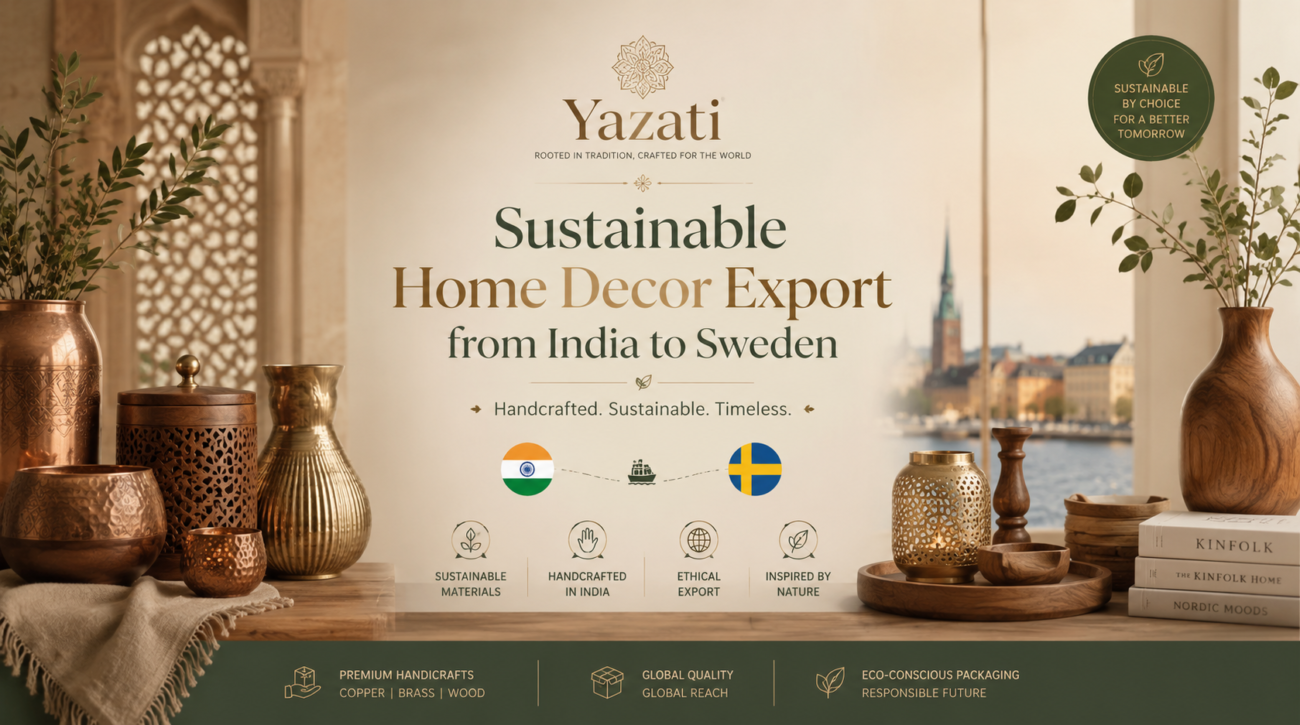
The Sustainable Home Decor Export from India to Sweden has emerged as one of the fastest-growing segments in international trade. As Swedish consumers increasingly prioritize eco-friendly lifestyles, ethical sourcing, and environmentally responsible products, Indian manufacturers have gained recognition for producing handcrafted, sustainable home décor items using natural materials such as bamboo, jute, reclaimed wood, organic cotton, terracotta, and recycled metals.
India’s centuries-old craftsmanship, combined with growing investments in sustainable manufacturing, positions the country as a preferred sourcing destination for Scandinavian importers. Swedish buyers value products that combine aesthetic appeal with environmental responsibility, making India an ideal trade partner.
This article explores the Swedish market, export opportunities, certifications, logistics, buyer expectations, pricing strategies, and practical guidance for Indian exporters looking to succeed in this expanding sector.
Why Sweden Is an Attractive Market for Sustainable Home Decor
Sweden consistently ranks among the world’s most environmentally conscious nations. Consumers actively seek products that support sustainable living, minimize carbon footprints, and promote ethical manufacturing.
Several factors contribute to Sweden’s attractiveness:
- High purchasing power
- Environmentally conscious consumers
- Strong demand for handmade products
- Preference for natural materials
- Growing online home décor market
- Stable import regulations
- Long-term supplier relationships
Swedish retailers increasingly prioritize suppliers that demonstrate transparency throughout their supply chains.
Growing Demand for Sustainable Home Decor
The global home décor market has experienced significant growth, and Sweden represents one of Europe’s strongest markets for sustainable interior design.
Several lifestyle trends continue driving demand:
- Minimalist interiors
- Scandinavian design
- Eco-friendly products
- Handmade craftsmanship
- Organic materials
- Circular economy principles
Consumers are now willing to pay premium prices for products that reduce environmental impact.
Consumer Trends in Sweden
Today’s Swedish consumers value:
- Recycled materials
- Plastic-free packaging
- Fair Trade production
- Carbon-neutral manufacturing
- Long-lasting products
- Local and ethical sourcing
These purchasing habits create excellent opportunities for Indian exporters specializing in sustainable home décor.
Eco-Friendly Lifestyle
Sustainability is no longer viewed as a luxury but as an essential aspect of everyday living in Sweden. Consumers actively consider environmental impact before making purchasing decisions.
Popular sustainable home décor categories include:
- Handmade baskets
- Organic cotton cushions
- Wooden wall art
- Bamboo storage products
- Recycled glass décor
- Ceramic planters
- Natural fiber rugs
India’s Competitive Advantage
India possesses several strengths that make it one of the world’s leading exporters of sustainable home décor.
Rich Craft Heritage
India has thousands of artisan communities specializing in:
- Wood carving
- Hand weaving
- Pottery
- Metal crafts
- Stone carving
- Bamboo handicrafts
- Cane furniture
These traditional skills create products that cannot easily be replicated through mass production.
Abundant Sustainable Raw Materials
Indian manufacturers have access to numerous renewable resources:
| Material | Sustainability Benefit |
|---|---|
| Bamboo | Rapidly renewable |
| Jute | Biodegradable |
| Cotton | Natural fiber |
| Mango Wood | Sustainable hardwood |
| Cane | Renewable |
| Terracotta | Natural clay |
| Coconut Shell | Agricultural waste utilization |
| Recycled Metal | Circular economy |
These materials align well with Swedish consumer expectations for environmentally responsible products.
Popular Sustainable Home Decor Products Exported to Sweden
Indian exporters supply a wide range of eco-friendly home décor products.
Wooden Home Decor
Wooden décor remains one of the largest export categories.
Popular items include:
- Wall shelves
- Candle holders
- Decorative trays
- Photo frames
- Mirrors
- Serving boards
- Wooden bowls
- Sculptures
Using responsibly sourced or reclaimed wood enhances product appeal in Sweden.
Bamboo Products
Bamboo is highly valued because it grows quickly and has a low environmental impact.
Best-selling bamboo products include:
- Storage baskets
- Lampshades
- Serving trays
- Decorative panels
- Plant stands
- Bathroom accessories
Its durability and natural appearance fit perfectly with Scandinavian interior design trends.
Jute and Cotton Decor
Natural fiber products continue gaining popularity.
Examples include:
- Rugs
- Cushion covers
- Wall hangings
- Table runners
- Laundry baskets
- Storage organizers
Organic cotton and dyed-natural fibers further strengthen sustainability credentials.
Ceramic and Terracotta Home Decor
Ceramic and terracotta products have become increasingly popular among Swedish consumers due to their timeless appeal, durability, and natural composition. Handmade pottery from India offers a unique blend of traditional craftsmanship and contemporary design that aligns well with Scandinavian aesthetics.
Popular ceramic and terracotta exports include:
- Decorative vases
- Indoor and outdoor planters
- Candle holders
- Tableware
- Decorative bowls
- Incense holders
- Wall décor
- Garden accessories
Using lead-free glazes and eco-friendly production methods further enhances product acceptance in European markets.
Sustainability Certifications That Build Buyer Confidence
Swedish importers often prefer suppliers with internationally recognized sustainability certifications. These certifications demonstrate compliance with environmental, social, and quality standards.
| Certification | Purpose |
|---|---|
| FSC (Forest Stewardship Council) | Responsible wood sourcing |
| GOTS (Global Organic Textile Standard) | Organic textiles |
| OEKO-TEX® Standard 100 | Textile safety and chemical testing |
| Fairtrade | Ethical labor practices |
| ISO 14001 | Environmental management systems |
| SA8000 | Social accountability |
| Sedex (SMETA Audit) | Ethical trade and supply chain transparency |
While not every product requires all certifications, obtaining relevant ones can improve credibility and increase the chances of securing long-term contracts with Swedish buyers.
Understanding Export Regulations for Sweden and the European Union
As Sweden is a member of the European Union (EU), products exported from India must comply with EU regulations.
Key considerations include:
- Accurate product labeling
- Country of origin declaration
- Compliance with applicable EU safety standards
- Restrictions on hazardous substances
- Proper customs documentation
- Correct Harmonized System (HS) codes
- Commercial invoice and packing list
- Certificate of Origin (where applicable)
Exporters should also stay informed about evolving EU sustainability policies that may affect product design, packaging, and supply chain transparency.
Eco-Friendly Packaging Requirements
Packaging is an important aspect of sustainable exports. Swedish buyers increasingly expect environmentally responsible packaging solutions.
Recommended packaging materials include:
- Recycled cardboard
- Kraft paper
- Biodegradable cushioning
- Paper tape
- Compostable protective materials
- Reusable packaging where feasible
Avoid excessive plastic packaging whenever possible, as many buyers actively seek suppliers committed to reducing plastic waste.
Best Practices
- Use right-sized cartons to minimize material usage.
- Clearly label fragile items.
- Ensure moisture protection for sea shipments.
- Include recycling symbols where appropriate.
Shipping and Logistics
Selecting the right logistics strategy is essential for maintaining product quality and controlling costs.
Common Shipping Methods
Sea Freight
- Cost-effective for large orders
- Suitable for furniture and bulk décor
- Longer transit times
Air Freight
- Faster delivery
- Ideal for urgent or small shipments
- Higher transportation costs
Important Logistics Considerations
- Cargo insurance
- Incoterms (e.g., FOB, CIF, DDP)
- Freight forwarding partners
- Customs clearance
- Warehouse and inventory planning
Proper planning helps avoid delays and ensures timely delivery to Swedish buyers.
How to Find Swedish Buyers
Finding reliable buyers is one of the most important steps in expanding exports.
1. Participate in International Trade Fairs
Trade exhibitions focused on home décor, interiors, and sustainable products provide opportunities to connect with wholesalers, retailers, and distributors.
2. B2B Marketplaces
Create professional profiles on reputable B2B platforms to showcase your products and certifications.
3. Build a Professional Website
Your website should include:
- Product catalog
- Company profile
- Sustainability commitments
- Certifications
- Manufacturing capabilities
- Contact information
- Export experience
4. Social Media Marketing
Platforms such as LinkedIn, Instagram, and Pinterest are effective for promoting visually appealing home décor products and connecting with international buyers.
5. Work with Export Promotion Organizations
Industry associations and export promotion councils can help identify overseas opportunities, participate in trade missions, and access market intelligence.
Pricing Strategy for the Swedish Market
Pricing should balance competitiveness with profitability while reflecting the value of sustainable and handcrafted products.
Factors Influencing Pricing
- Raw material costs
- Labor and craftsmanship
- Packaging
- Certifications
- Shipping expenses
- Insurance
- Customs duties
- Currency exchange rates
Value-Based Pricing
Swedish consumers often recognize the added value of:
- Handmade production
- Ethical sourcing
- Premium quality
- Environmental responsibility
- Durable materials
Communicating these benefits can justify premium pricing.
Digital Marketing Strategies for Indian Exporters
A strong online presence helps attract global buyers.
Search Engine Optimization (SEO)
Optimize your website for keywords related to sustainable home décor, exports, and Scandinavian markets. Publish informative articles, case studies, and product guides to improve visibility.
Content Marketing
Create engaging content such as:
- Behind-the-scenes videos of artisans
- Sustainability stories
- Product care guides
- Design inspiration
- Customer success stories
Email Marketing
Maintain regular communication with prospects through newsletters featuring:
- New product launches
- Seasonal collections
- Sustainability initiatives
- Trade fair participation
- Promotional offers
Professional Photography
High-quality images showcasing products in modern interior settings significantly enhance buyer interest.
Common Challenges and Practical Solutions
| Challenge | Solution |
|---|---|
| High shipping costs | Consolidate shipments and optimize packaging |
| Meeting certification requirements | Invest in relevant certifications and audits |
| Intense competition | Differentiate through design, quality, and sustainability |
| Currency fluctuations | Use appropriate financial hedging strategies where suitable |
| Product damage during transit | Improve protective packaging and quality control |
| Communication barriers | Provide clear documentation and responsive customer service |
Proactively addressing these challenges strengthens buyer confidence and supports long-term business growth.
Future Opportunities for Sustainable Home Decor Exports
Several trends are expected to shape the future of the market:
- Increased demand for circular economy products
- Greater emphasis on supply chain transparency
- Expansion of eco-conscious e-commerce
- Growth in biodegradable and recycled materials
- Rising interest in handcrafted and artisanal goods
- Increased adoption of digital product catalogs and virtual showrooms
Indian exporters who innovate while maintaining sustainability standards are well positioned to benefit from these trends.
Frequently Asked Questions (FAQs)
1. Why is Sweden an attractive market for sustainable home décor?
Sweden has environmentally conscious consumers, high purchasing power, and a strong preference for ethically sourced, eco-friendly products, making it an excellent destination for sustainable home décor exports.
2. Which sustainable materials are most popular in Sweden?
Bamboo, jute, organic cotton, reclaimed wood, terracotta, recycled glass, and recycled metals are among the most sought-after materials.
3. Do Indian exporters need sustainability certifications?
While not always mandatory, certifications such as FSC, GOTS, OEKO-TEX®, and Fairtrade can improve buyer confidence and increase competitiveness in the Swedish market.
4. What are the most popular home décor products exported from India to Sweden?
Popular products include wooden décor, bamboo accessories, jute rugs, ceramic planters, handcrafted baskets, wall art, candles, and textile furnishings.
5. What is the best shipping method for home décor exports?
Sea freight is generally the most cost-effective option for bulk shipments, while air freight is suitable for smaller or urgent consignments.
6. How can Indian businesses find Swedish buyers?
Businesses can participate in trade fairs, use B2B marketplaces, develop SEO-optimized websites, leverage social media, and collaborate with export promotion organizations to connect with Swedish importers.
Conclusion
The Sustainable Home Decor Export from India to Sweden represents a promising opportunity for Indian manufacturers, artisans, and exporters. Sweden’s growing preference for environmentally responsible products, combined with India’s rich tradition of craftsmanship and access to sustainable materials, creates a strong foundation for long-term trade relationships.
Success in this market depends on more than product quality alone. Exporters should focus on sustainability certifications, compliance with EU regulations, eco-friendly packaging, efficient logistics, competitive pricing, and strong digital marketing. By investing in transparency, innovation, and ethical production, Indian businesses can build lasting partnerships with Swedish buyers and strengthen their presence in one of Europe’s most sustainability-focused markets.
For additional guidance on exporting from India, consult the official resources provided by the Directorate General of Foreign Trade (DGFT): https://www.dgft.gov.in/
✨ Discover Global Sourcing Excellence with Netyex ✨
Netyex is your trusted B2B sourcing partner, connecting international buyers with India’s finest manufacturers and curated product lines—from handicrafts and home décor to kitchenware, textiles, hospitality essentials, and more. With verified suppliers and end-to-end support, we make global procurement seamless, reliable, and efficient.
👉 Elevate your sourcing experience—explore Netyex today.
📦 Bulk orders & customisation | 🌍 Worldwide delivery | 🤝 Trusted by global buyers
Visit Netyex to source premium Indian products with confidence.