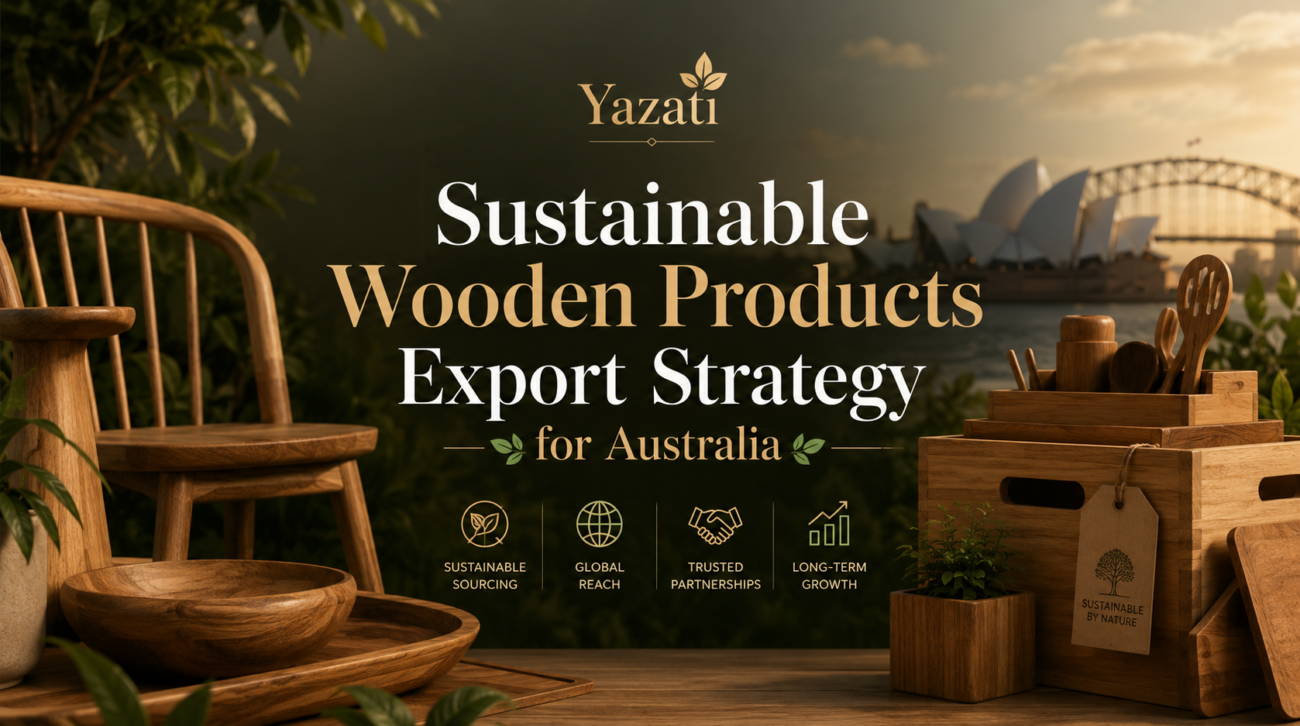
The global demand for environmentally responsible products is growing rapidly, and Australia has become one of the most promising destinations for eco-friendly wooden goods. Businesses that develop a strong Sustainable Wooden Products Export Strategy for Australia can unlock profitable opportunities while promoting responsible forestry and ethical trade practices.
Australian consumers are increasingly choosing sustainable furniture, wooden kitchenware, handcrafted décor, and biodegradable alternatives over plastic products. This shift is driven by environmental awareness, government regulations, and growing support for sustainable lifestyles.
For exporters, this creates a valuable opportunity. However, success requires more than simply shipping wooden products overseas. Exporters must understand Australian market expectations, sustainability certifications, pricing structures, logistics, branding, and compliance rules.
This guide explores practical strategies to help businesses build a successful export operation for sustainable wooden products in Australia.
Understanding the Australian Sustainable Wooden Products Market
Australia has one of the strongest sustainability-focused consumer markets in the Asia-Pacific region. Buyers actively look for ethically sourced products that align with eco-conscious values.
Why Eco-Friendly Wooden Products Are Growing in Demand
Several factors are increasing demand:
- Rising environmental awareness
- Government support for sustainable materials
- Consumer preference for reusable products
- Growth in eco-friendly interior design
- Increased corporate sustainability initiatives
Australian consumers often pay premium prices for products that demonstrate environmental responsibility and ethical sourcing.
Consumer Preferences in Australia
Australian buyers typically prefer:
- Natural finishes
- Minimalist Scandinavian-inspired designs
- Handmade or artisan-crafted products
- Recycled or reclaimed wood materials
- Plastic-free packaging
Products that combine sustainability with aesthetics tend to perform best.
Key Export Opportunities for Sustainable Wooden Products
Exporters should focus on product categories with strong demand and consistent growth.
Furniture and Home Décor
Eco-friendly furniture remains one of the largest opportunities. Popular items include:
- Dining tables
- Chairs
- Shelving
- Wooden wall décor
- Coffee tables
Compact furniture suitable for apartments is especially popular in urban Australian markets.
Kitchenware and Wooden Utensils
Consumers are replacing plastic kitchen products with sustainable alternatives such as:
- Wooden spoons
- Cutting boards
- Serving trays
- Bamboo storage containers
Food-safe coatings and certifications are essential in this category.
Packaging and Corporate Gifts
Many Australian companies seek sustainable corporate gifting options. Wooden gift boxes, engraved products, and reusable packaging are growing niches.
Identifying Your Ideal Australian Buyers
Understanding target customers is critical for export success.
Retail Chains
Large eco-focused retail chains often source sustainable products internationally. These buyers usually require:
- Consistent supply capacity
- Product certifications
- Strong packaging standards
- Competitive pricing
Eco-Conscious Online Stores
Australia has many online retailers specializing in sustainable living products. Smaller businesses may offer easier market entry opportunities for new exporters.
Hospitality and Commercial Buyers
Hotels, cafés, and restaurants increasingly use wooden products to reinforce sustainability branding. Opportunities include:
- Wooden serving boards
- Restaurant furniture
- Decorative accessories
Sustainable Sourcing and Certification Requirements
Sustainability claims must be supported by internationally recognized certifications.
FSC Certification Importance
The Forest Stewardship Council certification demonstrates responsible forest management practices. Many Australian buyers specifically request FSC-certified products.
Benefits include:
- Increased buyer trust
- Easier retail partnerships
- Stronger premium positioning
Learn more at the official FSC website: https://fsc.org
PEFC and Australian Compliance Standards
The Programme for the Endorsement of Forest Certification (PEFC) is another globally recognized certification system.
Exporters should also ensure compliance with Australian environmental standards and timber regulations.
Australian Import Regulations for Wooden Products
Australia has strict biosecurity laws designed to protect local ecosystems.
Biosecurity and Quarantine Rules
Wood products may be inspected for:
- Insects
- Bark contamination
- Mold or fungi
- Untreated timber risks
Failure to comply can lead to delays, fines, or shipment rejection.
ISPM 15 Packaging Standards
Wooden pallets and packaging materials must comply with ISPM 15 regulations. Heat-treated and properly marked packaging is mandatory for most exports.
Pricing Strategy for Australian Export Markets
Pricing affects both competitiveness and brand perception.
Competitive Pricing vs Premium Branding
Businesses must decide whether to compete on:
- Low-cost production
- Premium sustainable craftsmanship
- Luxury eco-branding
Australian consumers often value quality and sustainability more than the lowest price.
Currency Exchange and Shipping Costs
Exporters should account for:
- Currency fluctuations
- Ocean freight rates
- Insurance costs
- Customs duties
- Warehousing expenses
Transparent pricing improves buyer confidence.
Branding Strategies for Sustainable Wooden Products
Brand identity strongly influences buying decisions.
Storytelling and Ethical Branding
Consumers connect emotionally with authentic sustainability stories. Effective branding should explain:
- Where materials come from
- How products are made
- Environmental impact reduction
- Support for local artisans
Authenticity builds long-term trust.
Eco-Friendly Packaging Design
Sustainable packaging reinforces brand values. Recommended materials include:
- Recycled cardboard
- Compostable wrapping
- Soy-based inks
- Reusable cloth bags
Avoid excessive plastic packaging whenever possible.
Digital Marketing Strategy for Australian Buyers
Modern export businesses need strong digital visibility.
SEO and Content Marketing
Create optimized content around sustainability topics such as:
- Eco-friendly home living
- Sustainable furniture care
- Ethical sourcing practices
This improves search visibility and brand authority.
LinkedIn and B2B Outreach
LinkedIn is highly effective for reaching:
- Importers
- Retail buyers
- Hospitality procurement managers
- Distributors
Professional networking helps establish trust quickly.
Marketplace Platforms and E-Commerce
Consider selling through platforms such as:
- Amazon Australia
- Etsy
- Eco-focused marketplaces
- Shopify stores
Multi-channel distribution reduces dependency on one buyer.
Logistics and Shipping Strategy
Reliable logistics directly affect customer satisfaction.
Choosing Freight Partners
Select logistics providers experienced in:
- Timber exports
- Australian customs procedures
- Eco-friendly shipping solutions
Reliable delivery timelines improve buyer retention.
Warehousing and Distribution Models
Options include:
- Direct-to-retailer shipping
- Third-party logistics providers
- Local Australian warehousing
Local storage can reduce delivery times significantly.
Building Long-Term Partnerships in Australia
Strong relationships are essential in export markets.
Trade Shows and Networking
Participating in sustainability and furniture expos helps businesses:
- Meet buyers directly
- Showcase craftsmanship
- Understand market trends
Industry networking remains highly valuable.
Distributor and Agent Relationships
Local distributors can help with:
- Market access
- Retail introductions
- Customer service
- Regional logistics
Choose partners carefully based on reputation and market expertise.
Risk Management in Export Business
Every export strategy should include risk planning.
Supply Chain Disruptions
Potential risks include:
- Shipping delays
- Raw material shortages
- Rising freight costs
- Political instability
Diversified suppliers reduce vulnerability.
Legal and Payment Risks
Protect your business through:
- Export contracts
- Letters of credit
- Trade insurance
- Clear payment terms
Professional legal advice is recommended for large agreements.
Financial Planning and Government Support
Strong financial planning supports sustainable growth.
Export Incentives and Grants
Many governments offer support programs for exporters, including:
- Trade promotion grants
- Sustainability funding
- Export financing assistance
Research programs available in your country.
Insurance and Financing Options
Export insurance helps reduce financial risks related to:
- Non-payment
- Shipment damage
- Political disruptions
Banks may also provide export financing solutions.
Sustainable Wooden Products Export Strategy for Australia: Common Mistakes to Avoid
Common errors include:
- Ignoring Australian biosecurity rules
- Weak sustainability documentation
- Poor packaging standards
- Underestimating shipping costs
- Lack of local market research
- Inconsistent product quality
Avoiding these mistakes increases long-term success potential.
Future Trends in Sustainable Wooden Product Exports
Several trends are shaping the future market:
- Circular economy products
- Carbon-neutral manufacturing
- Smart sustainable furniture
- Minimalist eco-design
- Reclaimed wood products
- Eco-certified luxury branding
Businesses that adapt early will gain competitive advantages.
Frequently Asked Questions
What wooden products are most popular in Australia?
Furniture, kitchenware, home décor, and eco-friendly packaging products are among the most popular categories.
Do I need FSC certification to export wooden products to Australia?
It is not always legally required, but many buyers strongly prefer FSC-certified products.
How important is sustainable packaging?
Very important. Australian consumers value environmentally friendly packaging solutions.
What is ISPM 15 compliance?
It is an international standard for treated wooden packaging materials used in global shipping.
How can I find Australian buyers?
You can use trade fairs, LinkedIn, B2B marketplaces, distributor networks, and online retail partnerships.
Are Australian consumers willing to pay premium prices for sustainable products?
Yes. Many consumers prioritize quality, sustainability, and ethical sourcing over low prices.
Conclusion
Building a successful Sustainable Wooden Products Export Strategy for Australia requires a combination of sustainability, compliance, branding, logistics, and relationship-building. Australia offers strong growth opportunities for exporters that can meet rising demand for environmentally responsible wooden products.
Businesses that invest in certifications, ethical sourcing, quality craftsmanship, and digital marketing will position themselves for long-term success. As sustainability becomes more important worldwide, exporters who adapt now can build resilient and profitable global brands.
✨ Discover Global Sourcing Excellence with Netyex ✨
Netyex is your trusted B2B sourcing partner, connecting international buyers with India’s finest manufacturers and curated product lines—from handicrafts and home décor to kitchenware, textiles, hospitality essentials, and more. With verified suppliers and end-to-end support, we make global procurement seamless, reliable, and efficient.
👉 Elevate your sourcing experience—explore Netyex today.
📦 Bulk orders & customisation | 🌍 Worldwide delivery | 🤝 Trusted by global buyers
Visit Netyex to source premium Indian products with confidence.