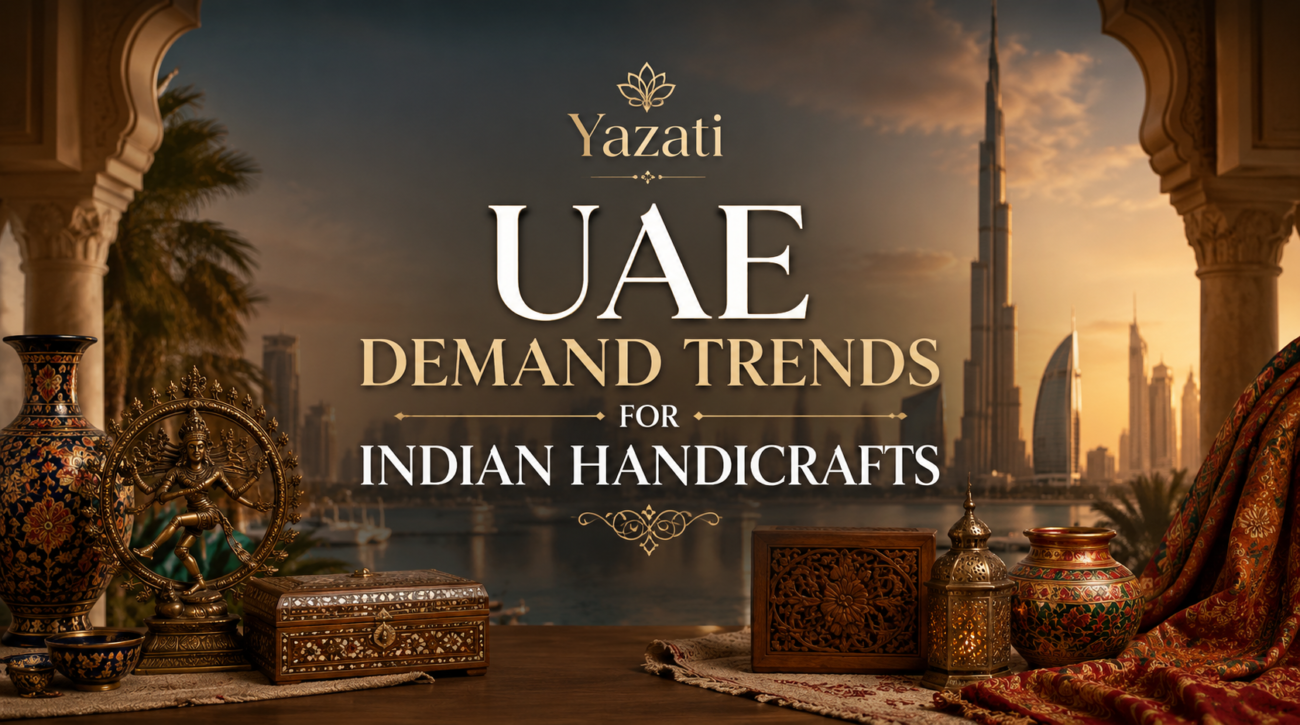
The UAE has become one of the most promising international markets for Indian artisans and exporters. Over the past decade, the demand for authentic handmade products has increased significantly across cities like Dubai, Abu Dhabi, and Sharjah. From luxurious home décor to handcrafted furniture and ethnic textiles, Indian handicrafts are attracting buyers from both local Emirati consumers and expatriate communities.
The growing preference for eco-friendly, artistic, and culturally rich products has fueled the rise of UAE Demand Trends for Indian Handicrafts. Buyers in the UAE are now willing to spend more on premium handcrafted items that reflect uniqueness and craftsmanship. This shift presents a major opportunity for Indian exporters, artisans, and small businesses.
Introduction to the UAE Handicrafts Market
The UAE is known for its luxury retail culture and strong purchasing power. Tourists, expatriates, and local consumers create a diverse customer base that appreciates artistic and high-quality products. Indian handicrafts fit naturally into this market because they combine traditional artistry with practical use.
The UAE’s strategic location as a trade hub also makes it an ideal gateway for Indian handicraft exports to the broader Middle East region. Large retail stores, boutique interior design studios, hotels, and online marketplaces actively source handcrafted products from India.
Today, the UAE market is not limited to traditional souvenirs. Consumers are increasingly purchasing Indian handmade products for:
- Home decoration
- Hospitality interiors
- Religious and spiritual use
- Luxury gifting
- Corporate events
- Wedding décor
Why Indian Handicrafts Are Popular in the UAE
Cultural Similarities and Artistic Appreciation
The Middle Eastern market values intricate designs, rich textures, and artistic craftsmanship. Indian handicrafts, known for detailed embroidery, wood carving, brass work, and textile artistry, align perfectly with these preferences.
Arab consumers often appreciate:
- Traditional patterns
- Gold and metallic finishes
- Handcrafted luxury décor
- Ethnic-inspired furniture
- Artisan-made accessories
This cultural alignment increases the popularity of Indian handicraft products in premium UAE retail stores.
Growing Indian Expat Population
The UAE hosts millions of Indian expatriates who maintain strong emotional and cultural ties with Indian products. Many Indian families living in the UAE purchase handcrafted items for festivals, weddings, and home decoration.
Products commonly purchased by Indian expatriates include:
This consistent demand creates a stable customer base for exporters.
Key UAE Demand Trends for Indian Handicrafts
Rising Demand for Sustainable Handmade Products
Sustainability has become one of the strongest global consumer trends. UAE buyers are now more conscious about environmentally friendly products. Handmade crafts made from natural materials such as bamboo, jute, recycled wood, and clay are becoming increasingly popular.
Consumers are shifting away from mass-produced plastic décor toward:
- Sustainable home accessories
- Handmade baskets
- Eco-friendly tableware
- Natural fiber textiles
Indian artisans have a major advantage because many traditional crafts already use sustainable production methods.
Luxury Home Décor and Artisan Furniture Growth
The UAE luxury real estate sector continues to expand rapidly. Hotels, villas, resorts, and premium apartments frequently use handcrafted décor pieces to create unique interiors.
High-demand products include:
- Hand-carved wooden furniture
- Brass decorative items
- Antique-finish mirrors
- Marble inlay tables
- Artisan lighting fixtures
Interior designers in the UAE often source customized handcrafted products directly from Indian manufacturers.
Demand for Traditional Textiles and Embroidery
Indian textiles remain one of the most sought-after categories in the UAE market. Rich embroidery styles, block prints, and handwoven fabrics are widely used in:
- Home furnishing
- Fashion boutiques
- Luxury hotels
- Wedding décor
Popular textile products include:
- Cushion covers
- Silk runners
- Embroidered curtains
- Handmade quilts
- Decorative tapestries
Eco-Friendly Gift Items and Corporate Gifting
Corporate gifting has become a major business sector in the UAE. Companies increasingly prefer unique handcrafted gifts instead of generic imported products.
Indian handicrafts commonly used for gifting include:
- Handmade boxes
- Brass figurines
- Customized diaries
- Wooden trays
- Hand-painted décor pieces
The personalization factor makes handcrafted gifts highly valuable in the corporate market.
Top-Selling Indian Handicraft Categories in UAE
Wooden Handicrafts
Wooden products remain one of the strongest categories in UAE Demand Trends for Indian Handicrafts. Buyers prefer carved wooden furniture, decorative panels, trays, and storage boxes.
Popular woods include:
- Sheesham
- Mango wood
- Teak wood
Metal Artifacts
Indian brass and copper handicrafts are highly admired in UAE luxury décor markets. These products are commonly used in hotels, restaurants, and premium homes.
Examples include:
- Brass lanterns
- Decorative bowls
- Candle stands
- Wall plates
Luxury rugs are always in demand across the Middle East. Indian handmade carpets compete strongly because of their detailed craftsmanship and affordable pricing.
Pottery and Ceramics
Handmade pottery products are increasingly used in cafés, restaurants, and modern interior spaces.
Popular products include:
- Decorative vases
- Ceramic dinnerware
- Clay planters
- Artistic bowls
Marble Inlay and Stone Craft
Stone handicrafts from regions like Rajasthan continue to attract premium buyers in the UAE market. Marble tabletops and decorative inlay work are especially popular in luxury villas.
Consumer Buying Behavior in the UAE
Online Shopping Trends
E-commerce growth has transformed the handicraft market in the UAE. Consumers now prefer browsing unique artisan products online before purchasing.
Popular online channels include:
- Amazon UAE
- Noon
- Instagram shops
- Boutique handicraft websites
Online platforms allow Indian exporters to reach UAE customers directly.
Preference for Premium and Authentic Products
UAE consumers value authenticity. Handmade certification, artisan stories, and product origin details strongly influence purchasing decisions.
Customers are willing to pay higher prices for:
- Authentic craftsmanship
- Handmade exclusivity
- Limited-edition décor
- Sustainable products
Seasonal and Festival-Based Purchases
Demand spikes during:
- Ramadan
- Eid
- Diwali
- Wedding seasons
- Tourism periods
Retailers often increase inventory during these times.
UAE Import and Export Market Analysis
Major Import Hubs in UAE
The UAE’s main import centers for handicrafts include:
- Dubai
- Abu Dhabi
- Sharjah
Jebel Ali Port plays a major role in regional distribution.
Trade Policies and Import Regulations
The UAE generally supports international trade with relatively business-friendly policies. However, exporters must comply with:
- Labeling standards
- Product safety regulations
- Customs documentation
- Packaging requirements
Impact of Free Trade Zones
Free trade zones in the UAE offer advantages such as:
- Tax benefits
- Simplified import procedures
- Warehousing facilities
- Regional distribution access
These zones help Indian exporters reduce operational costs.
Role of E-Commerce in UAE Demand Trends for Indian Handicrafts
Growth of Online Marketplaces
Digital marketplaces have made handcrafted products more accessible than ever. Consumers now compare products online based on:
- Reviews
- Design uniqueness
- Sustainability
- Price
Indian exporters can leverage digital platforms to increase visibility and sales.
Social Media Marketing Influence
Platforms like Instagram and Pinterest strongly influence handicraft purchases. Visually attractive handmade products perform exceptionally well on social media.
Effective strategies include:
- Artisan storytelling
- Product videos
- Home décor inspiration
- Influencer collaborations
Opportunities for Indian Exporters
Collaborations with UAE Retailers
Retail partnerships can help Indian exporters secure long-term orders and brand visibility.
Hospitality and Interior Design Sector Demand
Hotels, resorts, cafés, and luxury villas continuously seek handcrafted décor items to create unique guest experiences.
Participation in Trade Fairs and Exhibitions
Events in Dubai provide direct networking opportunities with importers and distributors.
Relevant events include:
- Interior design expos
- Gift fairs
- Home décor exhibitions
Challenges Faced by Indian Handicraft Exporters
Competition from Other Asian Markets
Countries like China, Vietnam, and Indonesia also supply handicrafts to the UAE market. Indian exporters must compete on:
- Quality
- Pricing
- Innovation
- Delivery timelines
Logistics and Shipping Costs
Shipping expenses and international freight charges can affect profitability, especially for bulky furniture products.
Maintaining Product Authenticity
Mass production can reduce the handmade appeal. Exporters must preserve craftsmanship quality while scaling operations.
Future Outlook for UAE Demand Trends for Indian Handicrafts
The future looks highly promising for Indian handicrafts in the UAE. Rising interest in sustainable luxury, artisan-made décor, and culturally rich products will likely continue driving demand through 2026 and beyond.
Growth areas expected to expand include:
- Eco-friendly décor
- Customized luxury furniture
- Handmade hospitality products
- Artisan gifting solutions
- Online handicraft retail
Indian exporters who invest in branding, digital marketing, and product innovation can achieve significant long-term success in the UAE market.
Frequently Asked Questions
1. Why are Indian handicrafts popular in the UAE?
Indian handicrafts are valued for their artistic craftsmanship, cultural richness, sustainability, and premium quality.
2. Which Indian handicraft products sell the most in the UAE?
Wooden furniture, brass décor, textiles, carpets, ceramics, and marble inlay products are among the top-selling categories.
3. Is the UAE a good export market for Indian handicrafts?
Yes, the UAE offers strong purchasing power, high tourism, and a growing demand for luxury handmade products.
4. How can Indian exporters enter the UAE market?
Exporters can enter through online marketplaces, distributors, retail partnerships, trade fairs, and free trade zones.
5. What trends are shaping UAE Demand Trends for Indian Handicrafts?
Major trends include sustainability, luxury home décor, personalized gifting, and online shopping growth.
6. Which UAE cities are best for handicraft business opportunities?
Dubai, Abu Dhabi, and Sharjah are the leading cities for handicraft imports and retail opportunities.
Conclusion
The UAE market offers enormous potential for Indian artisans, exporters, and handicraft brands. As consumer preferences shift toward sustainability, authenticity, and handcrafted luxury, UAE Demand Trends for Indian Handicrafts continue to strengthen.
Businesses that focus on product quality, storytelling, customization, and digital presence will be best positioned for success. With growing demand across retail, hospitality, and online sectors, Indian handicrafts are expected to remain a valuable part of the UAE’s premium lifestyle market for years to come.
✨ Discover Global Sourcing Excellence with Netyex ✨
Netyex is your trusted B2B sourcing partner, connecting international buyers with India’s finest manufacturers and curated product lines—from handicrafts and home décor to kitchenware, textiles, hospitality essentials, and more. With verified suppliers and end-to-end support, we make global procurement seamless, reliable, and efficient.
👉 Elevate your sourcing experience—explore Netyex today.
📦 Bulk orders & customisation | 🌍 Worldwide delivery | 🤝 Trusted by global buyers
Visit Netyex to source premium Indian products with confidence.