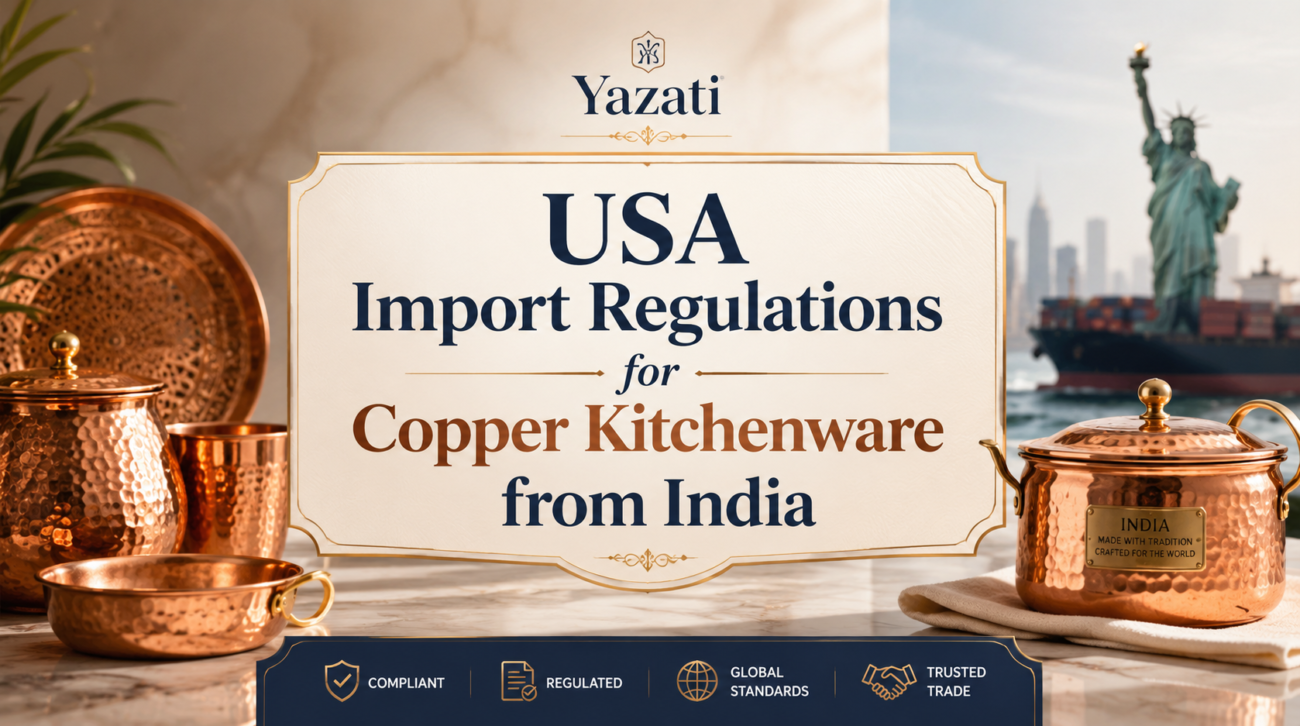
The market for handcrafted cookware and premium kitchen products is growing rapidly in the United States. Among the most popular imported products are Indian-made copper utensils, cookware, and decorative kitchenware. However, businesses involved in exporting or importing these items must understand the USA Import Regulations for Copper Kitchenware from India to avoid delays, penalties, or rejected shipments.
Copper kitchenware falls under food-contact products, meaning it is subject to strict rules from multiple U.S. agencies. Importers must comply with customs procedures, FDA safety standards, labeling requirements, and packaging regulations before products can legally enter the American market.
This guide explains everything importers and exporters need to know about bringing copper kitchenware from India into the United States.
Introduction to Copper Kitchenware Imports into the USA
Copper cookware has become a symbol of luxury cooking and sustainable living. Indian manufacturers are well-known worldwide for producing handcrafted copper bottles, pans, pots, serving dishes, and utensils.
The USA imports significant quantities of copper kitchenware from India because of:
- Skilled artisan craftsmanship
- Competitive manufacturing costs
- Traditional hand-hammered designs
- Increasing demand for eco-friendly cookware
Products commonly imported include:
- Copper water bottles
- Copper mugs
- Copper pans
- Copper serving bowls
- Copper utensils
- Decorative kitchen accessories
Because these products come into direct contact with food and beverages, U.S. authorities carefully regulate them.
Why Indian Copper Kitchenware Is Popular in the American Market
Demand for Handmade Copper Products
American consumers increasingly prefer artisanal and handmade kitchen products. Indian copperware offers traditional craftsmanship combined with aesthetic appeal.
Restaurants, hotels, and home chefs often choose Indian copper utensils because they provide:
- Elegant appearance
- Excellent heat conductivity
- Long product life
- Cultural and handmade value
Growth of Sustainable Kitchenware Trends
Eco-conscious consumers are moving away from plastic and disposable kitchen items. Copper products are reusable, recyclable, and environmentally friendly, making them highly attractive in the USA market.
Understanding USA Import Regulations for Copper Kitchenware from India
Several government agencies regulate imports entering the United States.
Role of U.S. Customs and Border Protection (CBP)
The primary authority overseeing imports is U.S. Customs and Border Protection.
CBP responsibilities include:
- Verifying import documentation
- Assessing customs duties
- Checking country-of-origin labels
- Preventing unsafe imports
- Ensuring tariff classification accuracy
Official CBP resource: https://www.cbp.gov
FDA Compliance Requirements
Copper kitchenware that contacts food may also fall under regulations from the U.S. Food and Drug Administration.
The FDA checks whether imported cookware contains harmful substances such as:
- Excess lead
- Unsafe metal coatings
- Toxic finishes
Food-contact products must comply with U.S. food safety laws.
Consumer Product Safety Standards
The Consumer Product Safety Commission may also regulate certain consumer kitchen products to ensure they do not create health hazards.
Harmonized Tariff Schedule (HTS) Codes for Copper Kitchenware
Correct tariff classification is critical when importing copper products.
Common HS Codes Used for Copper Utensils
Copper kitchenware often falls under tariff categories such as:
| Product Type | Example HTS Code |
| Copper tableware | 7418.10 |
| Copper household articles | 7418.20 |
| Kitchen utensils | 7418 series |
Importers should confirm the exact classification with a customs broker.
Import Duty Rates and Taxes
Duty rates depend on:
- Product category
- Manufacturing composition
- Trade agreements
- Current U.S. tariff rules
Importers may also pay:
- Merchandise Processing Fee (MPF)
- Harbor Maintenance Fee (HMF)
Rates can change regularly, so businesses should verify them before shipping.
FDA Requirements for Food-Contact Copper Products
Safety Standards for Copper Cookware
Pure copper can react with acidic foods. Because of this, many copper cooking products imported into the USA require safe interior linings.
Common approved linings include:
- Stainless steel
- Tin coating
- Nickel-free food-safe materials
Lead and Heavy Metal Restrictions
The FDA and customs authorities may test imported products for:
- Lead
- Cadmium
- Heavy metal contamination
Shipments exceeding allowed limits can be detained or destroyed.
Tin-Lined vs. Unlined Copper Utensils
Tin-lined copper cookware is generally considered safer for food preparation. Unlined copper products may face stricter review if marketed for cooking acidic foods.
Product Labeling and Marking Rules
Proper labeling is one of the most important parts of the USA Import Regulations for Copper Kitchenware from India.
Country of Origin Labeling
Every imported product must clearly display:
“Made in India”
The marking must be:
- Permanent
- Visible
- Legible
- In English
Failure to comply may result in customs penalties.
Material Disclosure Requirements
Labels should accurately identify:
- Copper composition
- Lining materials
- Care instructions
- Food-safe usage recommendations
Packaging and Barcode Standards
Retail-ready products often require:
- UPC barcodes
- Product SKU labels
- Retail packaging standards
- Safety warnings where applicable
Documentation Needed for Importing Copper Kitchenware
Proper paperwork helps shipments clear customs faster.
Commercial Invoice
The invoice should include:
- Buyer and seller details
- Product descriptions
- Unit prices
- Country of origin
- HTS code
Packing List
The packing list must detail:
- Carton count
- Product quantities
- Net and gross weight
- Packaging dimensions
Bill of Lading
This shipping document serves as proof of cargo transport.
Certificate of Origin
Some importers request a certificate confirming the goods were manufactured in India.
Shipping and Logistics Regulations
Ocean Freight vs. Air Freight
Most copper kitchenware imports use ocean freight because it is more economical for heavy products.
Air freight is used mainly for:
- Sample shipments
- Urgent orders
- High-value products
ISPM-15 Packaging Compliance
Wooden pallets used for exports must comply with international ISPM-15 standards.
This means the wood must be:
- Heat-treated
- Properly stamped
- Pest-free
Importer Security Filing (ISF)
Ocean shipments entering the USA require an Importer Security Filing, also called “10+2.”
Importers must file this before cargo departure.
Quality Certifications That Improve Import Approval
FDA Food Contact Certifications
Third-party testing reports showing food safety compliance can significantly reduce customs issues.
ISO Standards
Manufacturers with certifications like:
- ISO 9001
- ISO 22000
often gain greater trust from importers.
Third-Party Lab Testing
Independent laboratory testing may verify:
- Lead-free coatings
- Food-safe materials
- Heavy metal compliance
Common Challenges Faced by Indian Exporters
Customs Delays
Incomplete documentation is a major reason for shipment holds.
Incorrect Labeling
Missing country-of-origin markings can result in relabeling costs or penalties.
Product Testing Failures
Unsafe coatings or excessive lead content may cause shipment rejection.
Best Practices for Exporting Copper Kitchenware to the USA
Working With Licensed Customs Brokers
Customs brokers help importers:
- Classify products correctly
- Calculate duties
- File customs paperwork
- Resolve clearance issues
Conducting Pre-Shipment Inspections
Quality inspections before shipping reduce the risk of rejected products.
Maintaining Compliance Documentation
Keep records of:
- Test certificates
- Supplier agreements
- Material specifications
- Shipping documents
These records may be requested during customs audits.
Costs Involved in Importing Copper Kitchenware
Shipping Costs
Shipping expenses depend on:
- Cargo weight
- Container size
- Freight method
- Fuel prices
Customs Duties
Duties vary according to tariff classification and declared value.
Warehousing and Distribution
Importers may also pay for:
- Storage
- Distribution centers
- E-commerce fulfillment
- Insurance
Future Trends in USA Imports of Copper Kitchenware
Eco-Friendly Consumer Preferences
Sustainable products continue gaining popularity in the U.S. market.
Growth of Premium Handmade Kitchenware
Luxury home décor and premium cookware trends are driving demand for artisanal Indian copperware.
FAQs About USA Import Regulations for Copper Kitchenware from India
1. Does copper kitchenware require FDA approval before import?
Most products do not need pre-approval, but they must comply with FDA food-contact safety standards.
2. Can unlined copper cookware be imported into the USA?
Yes, but it may face stricter safety review if intended for cooking acidic foods.
3. Is “Made in India” labeling mandatory?
Yes, country-of-origin marking is legally required.
4. What documents are required for importing copper utensils?
Key documents include:
- Commercial invoice
- Packing list
- Bill of lading
- Customs forms
5. Are heavy metal tests necessary?
Many importers request third-party testing to ensure compliance with FDA safety standards.
6. What is the biggest reason shipments get delayed?
Incorrect paperwork and labeling errors are the most common causes.
Conclusion
Understanding the USA Import Regulations for Copper Kitchenware from India is essential for successful international trade. Importers must comply with customs procedures, FDA food-contact safety rules, labeling requirements, and shipping standards to avoid delays and penalties.
Indian copper kitchenware continues gaining popularity in the United States because of its craftsmanship, sustainability, and premium appeal. Businesses that prioritize compliance, documentation, and quality testing can build long-term success in this growing market.
✨ Discover Global Sourcing Excellence with Netyex ✨
Netyex is your trusted B2B sourcing partner, connecting international buyers with India’s finest manufacturers and curated product lines—from handicrafts and home décor to kitchenware, textiles, hospitality essentials, and more. With verified suppliers and end-to-end support, we make global procurement seamless, reliable, and efficient.
👉 Elevate your sourcing experience—explore Netyex today.
📦 Bulk orders & customisation | 🌍 Worldwide delivery | 🤝 Trusted by global buyers
Visit Netyex to source premium Indian products with confidence.