Introduction
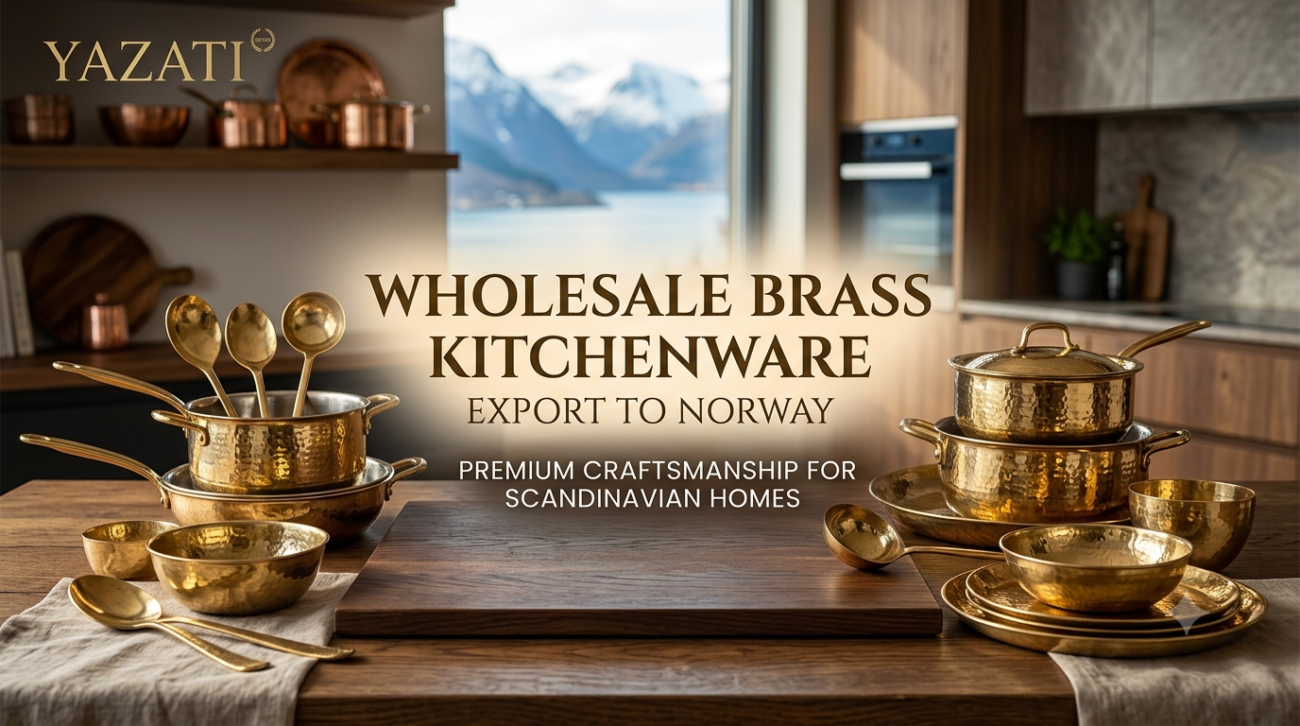
The demand for premium kitchenware is steadily increasing across Europe, and Norway has become one of the most attractive destinations for exporters. Among various product categories, Wholesale Brass Kitchenware Export to Norway has gained significant attention due to the country’s preference for durable, sustainable, and aesthetically appealing household products.
Brass kitchenware combines elegance with functionality. Products made from brass are valued for their long lifespan, timeless appearance, and ability to complement both traditional and modern kitchens. As Norwegian consumers increasingly seek eco-friendly and high-quality products, brass kitchenware presents an excellent opportunity for manufacturers and exporters.
India, in particular, is recognized as one of the world’s leading producers of handcrafted brass products. Indian manufacturers supply premium brass cookware, utensils, serving bowls, trays, decorative accessories, and custom kitchenware to buyers across Europe, including Norway.
Whether you are a manufacturer, exporter, wholesaler, or importer, understanding market trends, quality standards, export procedures, and customer preferences is essential for building a successful export business.
Why Norway is an Attractive Market for Brass Kitchenware
Norway has one of the highest standards of living in Europe. Consumers are willing to invest in premium-quality home and kitchen products that combine durability with attractive design.
Several factors contribute to Norway’s growing demand for brass kitchenware:
- Strong purchasing power
- Preference for sustainable products
- Interest in handcrafted home décor
- Growing hospitality industry
- Demand for premium dining accessories
- Rising popularity of Scandinavian interior design mixed with traditional materials
Unlike low-cost disposable kitchen products, brass kitchenware offers long-term value. This aligns perfectly with Norwegian consumers who prioritize quality over quantity.
Another significant advantage is Norway’s appreciation for minimalist yet luxurious home décor. Brass products fit naturally into this design philosophy by adding warmth and elegance without overwhelming the space.
Overview of the Norwegian Kitchenware Industry
The Norwegian kitchenware market has evolved considerably over the past decade. Consumers are becoming more selective, seeking products that are environmentally friendly, visually appealing, and built to last.
Luxury home products are no longer limited to high-income households. Middle-income consumers are also investing in premium kitchen accessories due to increased awareness of product quality and sustainability.
Consumer Preferences
Modern Norwegian buyers often prefer products that offer:
- Sustainable materials
- Handcrafted quality
- Elegant finishes
- Food-safe construction
- Minimal environmental impact
- Long product lifespan
Brass kitchenware checks all these boxes, making it a preferred option for many retailers and importers.
Demand for Premium Kitchenware
Restaurants, boutique hotels, cafés, catering businesses, and luxury home retailers increasingly source premium brass products for serving and presentation purposes.
Popular applications include:
- Fine dining
- Luxury table settings
- Home decoration
- Gift collections
- Wedding gifts
- Hospitality projects
This expanding customer base creates excellent opportunities for exporters looking to establish long-term partnerships.
Benefits of Wholesale Brass Kitchenware Export to Norway
Exporting brass kitchenware offers numerous advantages for businesses seeking international growth.
Growing Demand
The global market for sustainable kitchenware continues to expand, and Norway remains one of Europe’s most promising destinations.
Consumers appreciate products that combine:
- Traditional craftsmanship
- Premium quality
- Modern design
- Environmental responsibility
These trends directly support increased demand for brass kitchenware.
High Purchasing Power
Norwegian consumers generally have higher disposable incomes compared to many other markets.
This allows retailers to stock premium imported products without relying solely on low-cost alternatives.
Higher purchasing power also means customers are more willing to pay for:
- Handmade craftsmanship
- Superior finishing
- Customized products
- Designer collections
- Ethical manufacturing
Preference for Sustainable Products
Environmental responsibility plays a major role in purchasing decisions.
Brass is a recyclable material that can be reused multiple times without losing its quality. This sustainability factor makes brass products attractive to environmentally conscious consumers.
Exporters who highlight recyclable packaging, responsible sourcing, and eco-friendly manufacturing practices can gain a competitive advantage in the Norwegian market.
Popular Brass Kitchenware Products Exported to Norway
The Norwegian market imports a wide variety of brass kitchenware products suitable for both residential and commercial use.
1. Brass Cookware
Traditional brass cookware remains popular among consumers interested in premium cooking experiences and heritage-inspired kitchens.
Common products include:
- Cooking pots
- Handi
- Saucepans
- Stock pots
- Specialty cookware
2. Brass Utensils
Brass utensils continue to attract buyers looking for stylish serving accessories.
Popular items include:
- Serving spoons
- Ladles
- Tongs
- Spatulas
- Cutlery sets
These products are frequently purchased by restaurants, hotels, and luxury retailers.
3. Brass Bowls and Plates
Serving ware represents one of the fastest-growing categories.
Examples include:
- Dinner plates
- Dessert bowls
- Snack bowls
- Serving platters
- Fruit bowls
- Decorative trays
Many Norwegian consumers appreciate handcrafted finishes that add uniqueness to each piece.
4. Decorative Kitchen Accessories
Beyond functional kitchenware, decorative brass items are increasingly popular.
These include:
- Spice containers
- Storage jars
- Tea sets
- Coffee accessories
- Napkin holders
- Candle stands
- Table décor
Such products are commonly sold through lifestyle stores, gift shops, and interior design retailers.
Manufacturing Standards for Export Quality Brass Kitchenware
Maintaining international quality standards is essential for successful exports to Norway.
Reliable manufacturers implement rigorous quality control throughout the production process to ensure consistency and compliance with buyer expectations.
Material Specifications
Export-grade brass kitchenware is typically manufactured using carefully selected brass alloys that provide:
- High durability
- Corrosion resistance
- Attractive finish
- Excellent strength
- Food-safe properties (when appropriately manufactured and finished)
Manufacturers also pay close attention to polishing, finishing, dimensional accuracy, and surface quality to meet the expectations of premium international buyers.
Quality Control Measures for Export-Grade Brass Kitchenware
Maintaining consistent quality is essential for building trust with Norwegian importers. Every product should undergo multiple inspections before shipment to ensure it meets buyer specifications and international standards.
A comprehensive quality control process typically includes:
- Raw material inspection
- Dimensional accuracy checks
- Surface finish evaluation
- Weight verification
- Food-contact safety assessment (where applicable)
- Packaging inspection
- Final pre-shipment quality audit
Professional exporters often maintain detailed quality records and provide inspection reports upon request. Consistent quality not only reduces returns and complaints but also strengthens long-term business relationships.
Export Regulations for Wholesale Brass Kitchenware Export to Norway
Understanding export regulations is crucial for ensuring smooth customs clearance and timely delivery.
Since Norway is part of the European Economic Area (EEA) but not the European Union Customs Union, exporters should verify applicable import requirements, product standards, and documentation before shipping.
Essential Export Documents
Most shipments require documentation such as:
- Commercial Invoice
- Packing List
- Bill of Lading or Air Waybill
- Certificate of Origin (if applicable)
- Insurance Certificate
- Export Declaration
- Any buyer-requested compliance documentation
Accurate paperwork minimizes delays and helps avoid additional customs costs.
Customs Compliance
Norwegian customs authorities expect imported products to comply with applicable regulations regarding:
- Product labeling
- Material composition
- Country of origin
- Packaging standards
- Product safety requirements
Exporters should work closely with freight forwarders and customs brokers to ensure compliance with the latest import regulations.
Packaging and Shipping Best Practices
Proper packaging protects brass kitchenware from scratches, dents, moisture, and handling damage during international transportation.
Recommended packaging methods include:
- Individual protective wrapping
- Bubble wrap or foam cushioning
- Corrugated export cartons
- Corner protection
- Moisture-resistant packaging materials
- Wooden pallets for bulk shipments
- Clear shipping labels and handling instructions
For premium products, attractive retail-ready packaging can also increase perceived value and improve shelf presentation.
Shipping Options
The choice of transportation depends on shipment size, urgency, and budget.
Sea Freight
Sea freight is generally the most economical option for wholesale orders. It is suitable for large consignments and offers competitive shipping costs.
Air Freight
Air freight is preferred for urgent deliveries, product samples, and smaller shipments where speed is more important than cost.
Courier Services
Courier companies are often used for prototypes, catalogs, and sample products before confirming larger commercial orders.
Selecting the appropriate shipping method helps balance delivery time and transportation expenses.
Pricing Strategy for the Norwegian Market
Developing the right pricing strategy is essential for remaining competitive while maintaining healthy profit margins.
Factors influencing export pricing include:
- Raw material costs
- Manufacturing expenses
- Labor costs
- Packaging
- Inland transportation
- Export documentation
- Freight charges
- Insurance
- Import duties and taxes
- Currency exchange rates
Rather than competing solely on price, exporters can emphasize superior craftsmanship, premium finishes, customization, and reliable delivery to justify higher value.
Finding Buyers in Norway
Identifying reliable buyers is one of the most important steps in growing an export business.
Potential buyers include:
- Kitchenware wholesalers
- Home décor distributors
- Department stores
- Interior design retailers
- Hospitality suppliers
- Hotel procurement companies
- Restaurant equipment distributors
- Gift shops
- Online retailers
Building relationships with importers often begins with product catalogs, digital marketing, and participation in international trade exhibitions.
Effective Marketing Strategies
Successful exporters combine traditional business development with digital marketing to reach international buyers.
Useful strategies include:
- Developing a professional company website
- Publishing detailed product catalogs
- Showcasing high-quality product photography
- Maintaining active business profiles on professional networking platforms
- Participating in international trade fairs
- Sending product samples to prospective buyers
- Offering customization and private labeling services
- Collecting customer testimonials and case studies
Search engine optimization (SEO) also plays a key role in attracting overseas buyers searching for wholesale brass kitchenware suppliers online.
Common Challenges in Exporting Brass Kitchenware
Although the market offers strong opportunities, exporters may encounter several challenges.
Fluctuating Raw Material Prices
Brass prices can vary due to changes in copper and zinc markets, affecting production costs and pricing strategies.
Shipping Delays
International logistics may be affected by weather conditions, port congestion, customs inspections, or global supply chain disruptions.
Regulatory Changes
Import regulations and documentation requirements can change over time. Staying informed helps prevent shipment delays and compliance issues.
Competition
Exporters compete with manufacturers from various countries. Differentiating products through craftsmanship, quality, and customer service is essential.
Future Trends in the Norwegian Brass Kitchenware Market
Several trends are expected to shape future demand.
Sustainable Living
Consumers increasingly prefer durable, recyclable, and environmentally responsible products.
Premium Home Dining
More households are investing in elegant dining experiences, increasing demand for luxury serving ware.
Handmade Products
Authentic handcrafted products continue to attract buyers seeking uniqueness and traditional craftsmanship.
Customized Collections
Retailers increasingly request exclusive product designs, engraved branding, and private-label manufacturing.
E-commerce Growth
Online shopping enables international brands and exporters to reach Norwegian consumers more effectively than ever before.
Frequently Asked Questions (FAQs)
1. Why is Norway a good market for brass kitchenware?
Norway has a high standard of living, strong purchasing power, and growing demand for premium, sustainable home products.
2. Which brass kitchenware products are most popular?
Popular products include cookware, serving bowls, trays, utensils, tea sets, storage containers, and decorative kitchen accessories.
3. What documents are required for exporting brass kitchenware?
Common documents include the commercial invoice, packing list, transport document, certificate of origin (where applicable), insurance documents, and export declarations.
4. Is brass kitchenware environmentally friendly?
Yes. Brass is durable, reusable, and recyclable, making it a sustainable material for long-term use.
5. How can exporters find buyers in Norway?
Exporters can connect with buyers through trade fairs, B2B marketplaces, distributor networks, professional websites, and digital marketing campaigns.
6. What factors influence export pricing?
Pricing depends on raw material costs, manufacturing, packaging, logistics, insurance, exchange rates, and applicable duties or taxes.
Conclusion
Wholesale Brass Kitchenware Export to Norway presents a valuable opportunity for manufacturers and exporters aiming to expand into a market that appreciates quality, sustainability, and timeless design. Norwegian consumers increasingly seek products that combine durability with aesthetic appeal, making brass kitchenware a strong fit for both residential and commercial applications.
Success in this market depends on maintaining consistent product quality, understanding import requirements, using protective packaging, offering competitive pricing, and building lasting relationships with reliable buyers. Exporters who invest in strong branding, effective digital marketing, and excellent customer service are well-positioned to establish a long-term presence in Norway.
By focusing on craftsmanship, compliance, and market needs, businesses can capitalize on the growing demand for premium kitchenware and build a sustainable export business.
External Resource: For general guidance on international trade and export practices, visit the International Trade Centre: https://www.intracen.org
✨ Discover Global Sourcing Excellence with Netyex ✨
Netyex is your trusted B2B sourcing partner, connecting international buyers with India’s finest manufacturers and curated product lines—from handicrafts and home décor to kitchenware, textiles, hospitality essentials, and more. With verified suppliers and end-to-end support, we make global procurement seamless, reliable, and efficient.
👉 Elevate your sourcing experience—explore Netyex today.
📦 Bulk orders & customisation | 🌍 Worldwide delivery | 🤝 Trusted by global buyers
Visit Netyex to source premium Indian products with confidence.